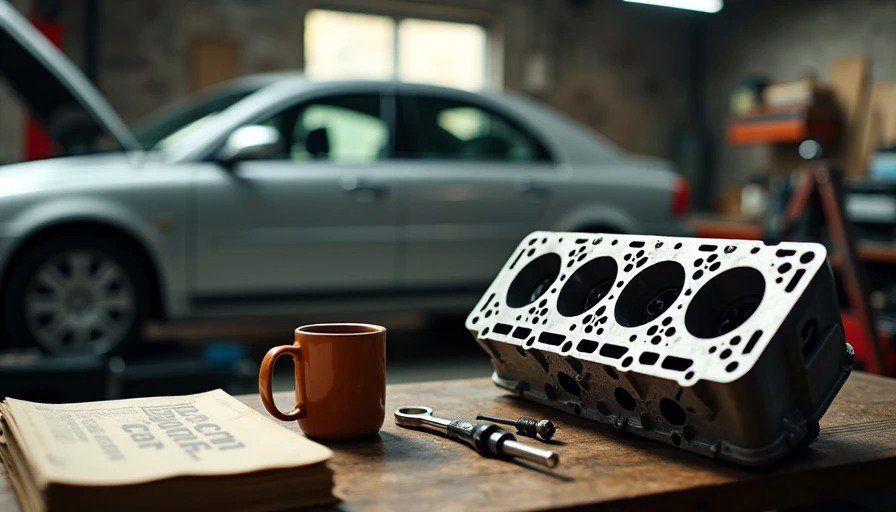
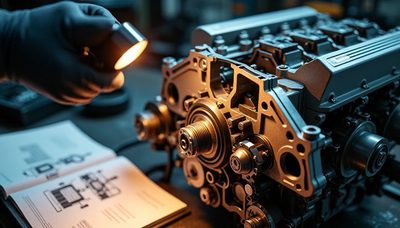
I've got an old straight-six cylinder head sitting on my workbench right now. It's from a 2005 Volvo S80 — the 2.9-litre twin-turbo B6294T, if you want the engineering code. It's heavy, it's beautiful, and it's completely obsolete.
I keep it around as a reminder. Because every time someone tells me "they don't build 'em like they used to," I pick up that head and think: "Thank God they don't."
Volvo made straight-sixes for over 40 years. They were smooth, durable, and genuinely over-engineered. And then, in 2013, Volvo announced they were done. No more six-cylinders. No more five-cylinders either — the beloved "five-banger" that powered everything from the 850 T-5 to the Focus RS was also on the chopping block.
The new plan? A single 2.0-litre four-cylinder engine family called Drive-E. Every Volvo — from the entry-level S60 to the flagship XC90 — would use some version of the same four-cylinder.
The internet lost its mind. Car enthusiasts called it "sacrilege." Journalists said Volvo was giving up on performance. BMW fans smugly pointed at their straight-six and said "good luck."
Eight years later, that decision looks like one of the smartest moves in automotive history. Here's why Volvo walked away from six cylinders — and how they made a four-cylinder work better than anyone expected.
The problem with six cylinders (in a Volvo)
To understand why Volvo abandoned sixes, you need to understand one thing about their entire engineering philosophy: transverse engine mounting.
Most luxury brands mount their engines longitudinally — north-south, with the transmission behind it. BMW has done this forever. It allows for a longer engine bay, better weight distribution, and easier access to the front of the engine.
Volvo does the opposite. Every Volvo since the 1970s has mounted the engine transversely — east-west, sitting directly on top of the transaxle. There's a reason: safety.
In a front-end collision, a transverse engine is designed to slide under the passenger compartment rather than driving back into the cabin. The engine block acts as a sacrificial crumple zone. It's a brilliant piece of crash engineering — and it's saved thousands of lives.
But it creates a packaging nightmare.
A straight-six is long. In a transverse layout, you're trying to fit a metre-long engine plus a transaxle plus a steering rack plus an exhaust manifold into a space about 1.2 metres wide. It's like trying to stuff a Christmas turkey into a lunchbox.
Volvo made it work for decades, but the packaging was always tight. The turbocharger was buried against the firewall. The exhaust manifold had to snake around the engine mount. The steering rack was crammed against the oil pan. Changing a spark plug on the rear bank required yoga-level flexibility.
The 2012 S80 T6 with the 3.0-litre straight-six had 304 horsepower. It was quick, smooth, and utterly miserable to work on. The timing chain replacement required dropping the entire subframe. The oil filter was tucked behind the steering rack. A coolant hose replacement was a four-hour job that should have taken 30 minutes.
That's not just inconvenient — it's expensive. And Volvo knew that their customers were walking into dealerships with $2,000 repair bills and walking out angry.
Meanwhile, competitors were downsizing. BMW had introduced the N20 four-cylinder in 2011. Audi had been doing four-cylinder turbos for years. The industry was moving toward smaller-displacement, forced-induction engines for fuel economy and emissions reasons.
Volvo had a choice: keep the six-cylinder and lose the efficiency race, or blow it all up and start fresh.
They chose the grenade.
The Drive-E revolution
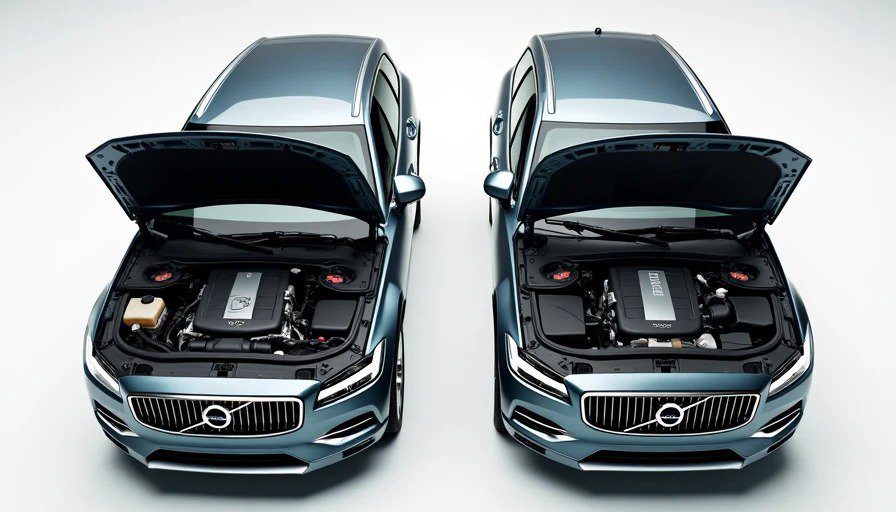
In 2013, Volvo announced their new VEA engine architecture — VEA stood for "Volvo Engine Architecture." They spent $2.5 billion developing it. That's nearly a tenth of the company's total value at the time.
The plan was radical: a single, 2.0-litre, four-cylinder engine block that would underpin every Volvo model. Everything from the 180-horsepower diesel to the 400-horsepower hybrid would use the same basic architecture.
The engineering team, led by Derek Crabb (who had been the head of powertrain at Ford's Performance division), designed the engine from scratch with one goal in mind: modularity.
Every single Drive-E engine shares the same block, the same cylinder head, the same bore and stroke dimensions — 82mm x 93.2mm. The differences come entirely from the outside — the turbocharger, the supercharger, the electric motor, the fuel injectors, the ECU calibration.
This is the opposite of the old approach. The old Volvo strategy was "different engine for every application." The new strategy was "one engine, infinite possibilities."
Here's the actual breakdown of the Drive-E family:
Badge | Configuration | Power | Application |
|---|---|---|---|
T3 | 2.0T | 156 hp | Entry-level Europe |
T4 | 2.0T | 190 hp | Mid-range sedans |
T5 | 2.0T (high boost) | 250 hp | S60, V60, XC60 |
T6 | 2.0T + supercharger | 316 hp | S90, V90, XC90 |
T8 | T6 + electric motor | 400 hp | Hybrid flagship |
D3/D4 | 2.0T diesel | 150-190 hp | European diesel models |
The T6 is the engineering masterpiece. It's a 2.0-litre four-cylinder with both a supercharger and a turbocharger — sequential charging. The supercharger provides low-end torque (eliminating the "turbo lag" that plagues small engines), and the turbocharger takes over at higher RPM for top-end power.
The result? 316 horsepower from a 2.0-litre four-cylinder — a specific output of 158 hp per litre. That's higher than the 3.0-litre straight-six's 101 hp per litre. Higher than the Porsche 911's 116 hp per litre. Higher than almost anything in its class.
And here's the kicker: the T6 engine weighs about 40 kilograms less than the old straight-six. That's 40 kilograms off the front axle — which means better handling, better weight distribution, and less understeer.
The repair reality (this is where it gets real)
I've been working on Drive-E engines since 2015. I've seen them at 20,000 miles and at 120,000 miles. I've fixed the common failures and I've seen the unusual ones.
Here's the unvarnished truth: the Drive-E is a good engine, but it's not perfect.
What works brilliantly:
The block is stout. It's made of die-cast aluminium with cast-iron cylinder liners. We've never seen a block failure — not one. The bottom end is overbuilt for the power levels it produces.
The valvetrain is reliable. It uses camshaft phasing and a timing chain that's designed to last the life of the engine — and in my experience, it does. I've replaced one timing chain in five years, and that was on a car that had clearly been abused.
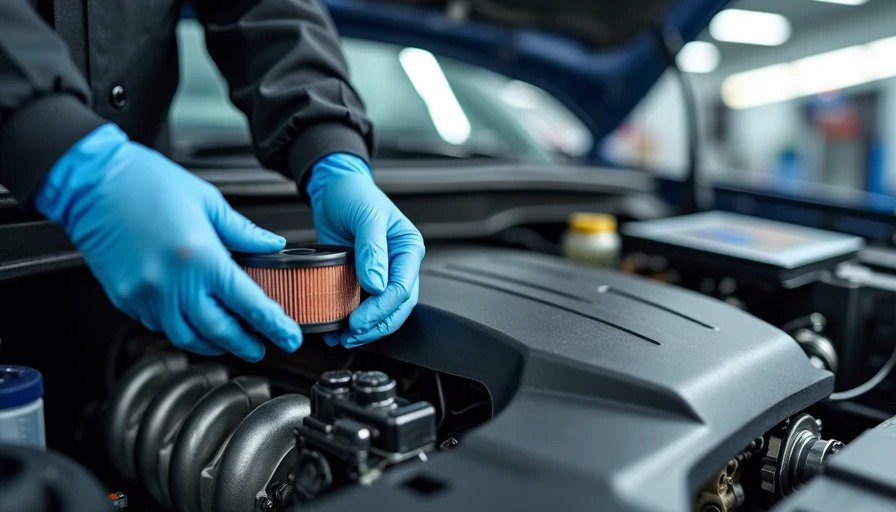
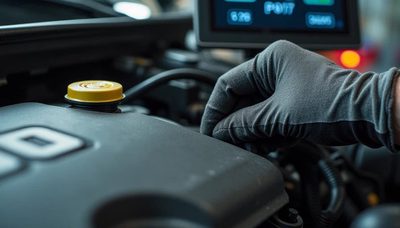
The oil system is well-designed. The variable-displacement oil pump maintains consistent pressure regardless of engine speed. The oil filter is on top of the engine — you can change it in five minutes with one hand. This is a massive improvement over the old six-cylinder.
The coolant system is simple. Volvo went to electric water pumps on some models, which adds a failure point (more on this below), but on the T5 and base T4, the mechanical pump is robust.
What doesn't:
The supercharger clutch. On the T6, the supercharger is engaged by an electric clutch — and it fails. When the clutch goes, the supercharger stops engaging, and you lose low-end torque. It's a $1,200 repair, and I've seen it on three T6s in the past year. The 2015-2016 models are the worst offenders.
The EGR system. European models with diesel engines have frequent EGR valve failures — but in the US, we only get petrol engines, so it's less of an issue. That said, the PCV system on petrol models can clog if you use cheap oil and stretch oil change intervals beyond 10,000 miles.
Electric water pumps. Some Drive-E models use an electric coolant pump for the turbocharger and battery cooling. It's a Bosch unit, and they fail around 60,000-80,000 miles. You'll know it's failing because the car will overheat under load, and the dash warning will say "Engine Temperature High" — even if the gauge reads normal. The pump is $500, and it's an hour to replace.
Oil consumption. Here's the one that's caused the most headaches. Some Drive-E engines — particularly the early 2015-2016 T5 and T6 — consume oil at a rate of about 1 quart per 3,000-5,000 miles. Volvo says this is "within spec," which I find frustrating. It's caused by the piston rings, which are not as robust on the early models. The fix is either a piston ring replacement (which is $4,000 and requires pulling the engine) or just carrying a bottle of oil in the boot. I'd recommend the latter — and check the oil level every 2,000 miles.
The verdict on reliability
The Drive-E is more reliable than the old straight-six in most ways, but it has its quirks. The turbocharger and supercharger are robust, the bottom end is solid, and the electronics are generally trouble-free. Just budget for a supercharger clutch on T6 models, and change the oil every 7,500 miles — not 10,000.
If you buy a 2017 or later model, most of the early issues were sorted. The 2018+ Drive-Es are genuinely excellent engines.
Why it's actually better than the old six
Here's the thing that enthusiasts struggle to accept: the Drive-E four-cylinder is not a compromise. It's a genuine engineering upgrade.
Power: The T6 makes 316 hp. The old straight-six made 304 hp. That's more power from half the cylinders.
Weight: The Drive-E is 40 kg lighter. That's not just for fuel economy — it makes the car more agile and less nose-heavy. The S90 handles better than the old S80 ever did, thanks almost entirely to the weight distribution.
Efficiency: The old T6 got about 22 mpg combined. The new T6 gets 27 mpg combined. That's a 20% improvement, and it's the difference between filling up every 350 miles and every 450 miles.
Packaging: This is the hidden benefit. The transversely mounted four-cylinder leaves enough room for Volvo to add the electric motor for the T8 hybrid. Without downsizing to a four-cylinder, the XC90 and S90 wouldn't have been able to fit the hybrid system. The Drive-E isn't just an engine — it's an architecture that enables hybridisation.
Repairability: For all the issues I mentioned, the Drive-E is significantly easier to work on than the old straight-six. The oil filter is on top. The spark plugs are accessible. The timing chain is on the front of the engine. A major service on the old six required 8 hours of labour. The Drive-E takes 3.
What I tell my customers
When someone comes into Keller Motor Works with a Drive-E Volvo, here's what I tell them:
Change the oil every 7,500 miles. Volvo says 10,000. That's fine for the first owner, but the second owner will pay for the sludge. Use the correct grade — 0W-20 for most models, check your manual.
Check the oil level every 2,000 miles. If you have a 2015-2016 model, carry a quart in the boot. If it goes below the minimum, you'll damage the variable valve timing system — and that's a $2,000 repair.
If you have a T6, budget for the supercharger clutch. It's not "if" it fails, it's "when." Factor it into your purchase price. The 2018+ models are better, but the early ones are a known issue.
Replace the coolant at 50,000 miles. The coolant degrades, and the electric water pump in some models is sensitive. It's cheap preventive maintenance — about $150 at an indie shop.
Don't tune it. I've seen three Drive-E engines with failed pistons from aggressive aftermarket tunes. The engine is strong, but it's already pushing 316 hp from 2.0 litres — adding another 50 hp is asking for trouble. Leave it stock.
The bigger picture
Volvo's decision to walk away from six cylinders wasn't about performance. It wasn't about saving money in the short term. It was about survival.
In 2013, Volvo was a small manufacturer competing against giants — BMW, Mercedes, Audi, Lexus. They couldn't afford to develop multiple engine families. They couldn't afford to be inefficient. They couldn't afford to be seen as "behind" the rest of the industry.
The Drive-E engine allowed Volvo to leapfrog the competition in efficiency, packaging, and hybridisation potential. The same engine family now powers everything from the entry-level S60 to the $100,000 XC90 Recharge flagship.
And the car that used to have a six-cylinder? The S80's replacement, the S90, is a better car in every measurable way — faster, more efficient, better-handling, and easier to own.
I loved the old straight-six. It was smooth, durable, and characterful. But I don't miss repairing it.
The new four-cylinder is a better engine. It makes more power, uses less fuel, weighs less, and is cheaper to maintain. And yes, it doesn't sound as good at full throttle — but it also doesn't cost you $2,000 every time a spark plug needs changing.
That's progress. Volvo walked away from six cylinders, and they built something better.
Mia's two cents
When I explained this post to Mia at dinner, she looked at me with the expression she reserves for my worst dad jokes.
"Dad. You're telling me a smaller engine can be better than a bigger engine?"
"Yes."
"That's like saying a tiny sandwich is better than a big sandwich."
"Sometimes the small sandwich has better ingredients."
She thought about it for a second. "Okay, but a big sandwich with the same ingredients is still better. Can we get pizza instead?"
She's not wrong. But she's also six, and she hasn't had to pay for a timing chain replacement.
No signals yet — transmit the first.