When a crank sensor goes sideways, the car does not usually announce it politely. It cranks longer than it should, stumbles at idle, or dies at the worst possible moment, like rolling through an intersection with a grocery run in the back seat. If you're searching for symptoms of a bad crankshaft position sensor, the engine is probably already giving you enough clues. The tricky part is that those clues overlap with battery, fuel, ignition, and even transmission complaints. At the shop, I tell people not to replace the first part that gets blamed on the internet. Read the pattern first. The sensor tells the engine computer where the crankshaft is and how fast it is turning. When that signal goes bad, timing and fuel delivery start to fall apart.
What the sensor actually does
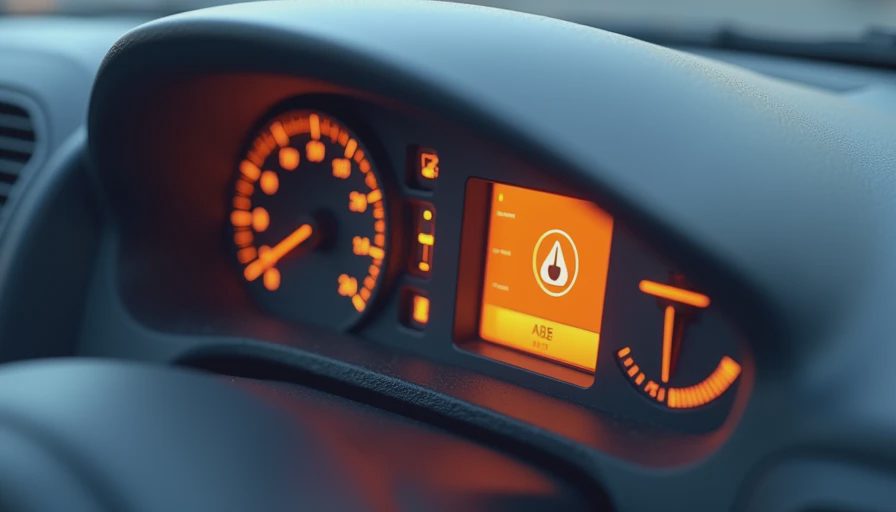
The first clue in symptoms of a bad crankshaft position sensor is that the engine computer loses track of crank speed. That matters because the computer uses that signal to fire the spark plugs and time the injectors. If the signal drops out, the car may think the engine stopped even when it is still spinning. On some vehicles, the tachometer will flutter or drop to zero before the stall. On others, the check engine light comes on with a crank sensor code, but the engine still runs badly enough that you can limp home. I have seen this on older Volvo and Infiniti engines, but the layout changes from car to car. The part is small, but it sits in a big chain of cause and effect. When it lies, everything downstream starts guessing. That is why a scan code is only the start, not the answer.

How it shows up on the road
Drivers usually notice symptoms of a bad crankshaft position sensor as a rough start, a stall, or a no-start after the car has soaked in heat. A common pattern is this: cold start in the morning, drive to work, shut it off for coffee, then it cranks forever and finally catches once the engine bay cools. Another pattern is a sudden cutout at idle with no obvious warning, then a restart after a few minutes. Some cars will buck like they have a fuel problem, especially under light throttle. Others will set misfire codes because the computer cannot keep spark timing steady. If the sensor signal gets noisy instead of dead, the engine may surge, stumble, or feel like the transmission is hunting gears even when it is not. That is how a simple sensor failure can waste an hour of guessing. Claire's version of the test is simpler: would she trust it on a rainy Portland evening after a 12-hour shift?
Why the part fails
A lot of symptoms of a bad crankshaft position sensor start as heat-soak failures. The sensor may work when it is cold and quit once the engine and exhaust have baked the wiring harness. Heat, oil seepage, road salt, metal shavings, and a cracked connector can all distort the signal. The sensor itself can wear out too, especially on engines where it sits near the crank pulley or bellhousing and gets cooked every day. I have pulled sensors out of cars where the tip was coated in debris from a failing timing component, and I have seen harness insulation turn brittle like old garden hose. If the reluctor wheel on the crankshaft is damaged, the symptom can look identical. That is why the fix starts with inspection, not guesswork.
How I confirm the diagnosis
On a scan tool, I look at crank and cam signal data, misfire counts, and the exact code history. P0335 through P0339 are the usual suspects, but a code alone does not prove the sensor is bad. I want to know whether the engine drops RPM to zero, whether the signal returns when the harness is moved, and whether the problem appears hot, cold, or both. If the car uses a Hall-effect sensor, I am not grabbing a random resistance reading and calling it a day. I want the wiring checked for power, ground, and continuity, plus a waveform or live-data check if the setup allows it. Three of these came through the shop last month, and two of them were wiring, not the sensor. That is the part owners skip when they order the cheapest replacement online.
What repair usually costs
If the sensor is easy to reach, the part may be only $40 to $120 and labor under an hour. If it lives behind an accessory bracket, under the intake, or near the transmission bellhousing, the bill can climb fast. A realistic independent-shop total is often $150 to $500, while some late-model luxury cars push higher because the labor time is ugly. In my shop, the better repair is usually not just swapping the sensor. I clean the connector, inspect the harness, confirm the charging system is healthy, and clear the codes before a road test. If the car stalled in traffic, I do not tell a driver to keep gambling on it. A dead sensor can turn a perfectly fine engine into a tow bill, and that is a bad trade every time.
If you are shopping a used car and the seller says it just needs a sensor, treat that as a diagnosis, not a discount. A real test drive should include a cold start, a hot restart, and a scan for pending codes. If the car fails one of those, fix the cause before you hand over money. The data is for the engineers. The feel is yours.





No signals yet — transmit the first.