A Toyota Crown JDM import to USA project sounds simple until the spreadsheet starts filling up with shipping fees, federal paperwork, port charges, and insurance questions. The Crown is exactly the sort of car that makes sense to a person who has already looked at a BMW 5 Series and decided the badge was not worth the maintenance anxiety. It is comfortable, unusual, and engineered around long-distance driving. It is also not a Camry with a different grille.
JDM means Japanese domestic market. That matters because a Crown built for Japan can have different lighting, emissions equipment, navigation systems, safety certification, and parts numbers from a Crown sold through American Toyota dealers. Some versions are right-hand drive, and many were never tested or certified for the US market. The car can be perfectly well built and still require careful planning before it reaches your driveway.
Which Toyota Crown can legally enter the US?
The first question is the vehicle's age. Under the federal 25-year import rule, a vehicle that is at least 25 years old can generally enter the United States without meeting current US safety standards. The age is based on the vehicle's manufacture date, not simply the model name or the day it arrives at an American port. A 1999 Crown may qualify while a visually similar 2000 car does not.
That rule does not turn every imported car into a normal American-market vehicle. Customs documentation, EPA forms, DOT declarations, and title paperwork still matter. A registered importer can help with vehicles that do not qualify for the 25-year exemption, but that route is expensive and limited. It is not a clever shortcut for bringing in a recent hybrid sedan that was never certified here.
A newer Toyota Crown JDM import to USA buyers should be separated from the Crown models Toyota sells in America. The US-market Crown is related by name and family history, but Japanese-market Crown Sedan, Crown Crossover, Crown Sport, and Crown Estate versions can use different powertrains and equipment. Do not assume an American dealer can order every Japanese component by entering a VIN into its parts system.
Before sending a deposit, ask the exporter for the chassis number, production month, auction sheet, title or export certificate, mileage evidence, and a clear photo of the compliance plate. If the seller cannot explain the car's eligibility, pause. A cheap car that sits at a port while storage fees accumulate is not a bargain.
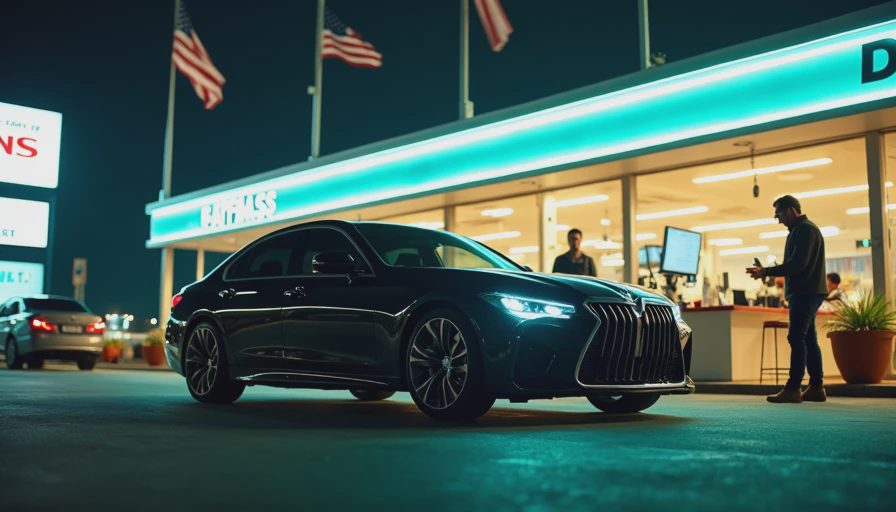
What the import process really involves
Most buyers work through an exporter in Japan, a US-based importer, or both. The exporter purchases the vehicle, arranges inland transport, and loads it into a container or onto a roll-on, roll-off vessel. Container shipping costs more but offers better protection for a valuable example and leaves room for parts or wheels when properly documented.
Once the car arrives, customs clearance begins. Expect charges beyond the sale price: export fees, ocean freight, marine insurance, customs duty, port handling, terminal storage, broker fees, inland transport, and state registration. A rough project budget can easily add $8,000 to $15,000 before repairs and registration, depending on the car's location, shipping method, exchange rate, and port congestion. That range is a planning figure, not a guaranteed quote.
The cleanest Toyota Crown JDM import to USA transaction has a written breakdown of every charge. I want to see the purchase price, auction commission, inland Japanese transport, freight, duty estimate, port fees, compliance work, and delivery to the buyer's address on separate lines. “All-in” is not useful if nobody defines what all includes.
After arrival, inspect the car before accepting it as finished. Check fluid leaks, rust underneath, battery condition, tire age, brake rotor surfaces, suspension bushings, and warning lights. A beautiful auction photograph cannot show a weak 12-volt battery, dried weather seals, or corrosion hidden behind plastic trim. On a hybrid, have someone verify battery cooling passages, insulation readings, and scan-tool data rather than relying only on the dashboard.
Parts, service, and daily usability
The Crown's mechanical quality is not the same thing as easy ownership. Routine items such as filters, fluids, brake components, and common sensors may be available through Toyota's global network or specialist suppliers. Body panels, lamps, windshield glass, interior switches, and Japan-only electronic modules can take longer and cost more. Some parts will require matching a Japanese catalog number instead of searching by a US VIN.
Right-hand drive is manageable, but it changes ordinary tasks. Drive-through windows, parking garage ticket machines, toll lanes, and roadside visibility all feel different. Headlight beam patterns must be correct for American roads, and some imported lighting assemblies need adjustment or replacement. If Mia is sitting behind the passenger seat, check child-seat access and rear-door operation before deciding that the large rear cabin solves every family problem.
A local Toyota dealer may service the engine and hybrid system but decline programming, warranty work, or diagnosis on a model outside its supported market. An independent shop with Toyota scan equipment is often the better relationship. Bring factory service information when possible, and keep a file containing translated auction records, maintenance invoices, and every part number used.
Insurance and registration questions
Insurance is an early conversation, not a final checkbox. A carrier may insure a 25-year-old Crown as a standard vehicle, while another may require a specialty policy, an inspection, or an agreed-value arrangement. Agreed value means the insurer and owner establish the vehicle's value before a covered loss, rather than relying entirely on ordinary market valuation. The premium depends on the driver, location, use, storage, mileage, and insurer rules.
Ask how the policy handles right-hand-drive equipment, imported parts, custom restoration, and diminished availability. Liability coverage protects you when you cause injury or property damage; comprehensive coverage generally addresses non-collision losses such as theft, hail, or falling objects; collision addresses damage from a crash. A lender may require both comprehensive and collision, while a collector-style policy may limit commuting or annual mileage.
A Toyota Crown JDM import to USA owner should also ask about towing after a breakdown. A standard roadside contractor can tow the car, but finding a shop willing to work on it is another matter. Get quotes from several insurers using the exact year, body style, engine, and declared value. Do not insure it as a cheaper Toyota model just to make the application fit; incorrect information can create a claim problem.

What should you budget before buying?
Start with the car, then build three reserves. The first is the arrival reserve: roughly $2,000 to $5,000 for port, broker, inland transport, and registration-related expenses in a straightforward case. The second is the recommissioning reserve: $1,500 to $4,000 for fluids, battery work, tires, brakes, seals, and small electrical repairs. The third is the surprise reserve. I would keep at least $3,000 available for a sensor, control module, suspension repair, or delayed part.
For a Crown with a purchase price near $20,000, a realistic finished cost can land around $30,000 to $40,000 before financing, depending on shipping and condition. That may still compare favorably with a newer luxury sedan, but the comparison is not just purchase price. You are trading dealer convenience and broad parts availability for rarity, character, and a cabin that will not be mistaken for every other executive sedan in the parking lot.
A practical buying checklist
Before committing to a Toyota Crown JDM import to USA, confirm the production date and 25-year eligibility. Verify the chassis number on every document. Obtain a pre-purchase inspection in Japan when possible, and translate the auction sheet instead of guessing at grades. Get two shipping quotes and a written customs estimate. Ask an insurer whether the exact vehicle can be covered before it leaves Japan.
Then line up the first service appointment at home. Confirm that the shop can scan the car, source Japanese-market parts, and work on its hybrid or turbo systems if equipped. Budget for tires and a battery even when the seller claims the car is ready. Finally, decide whether you want a daily driver or a weekend object. A Crown can handle regular use, but unusual electronics, scarce trim, and import-only glass make a backup plan sensible.
The right Toyota Crown is not a bargain version of a Lexus. It is a well-made, slightly eccentric sedan that asks you to participate in ownership. If you understand the federal rules, the paperwork, the repair network, and the insurance limits first, the experience can be deeply rewarding. The data is for the engineers. The feel is yours.




No signals yet — transmit the first.