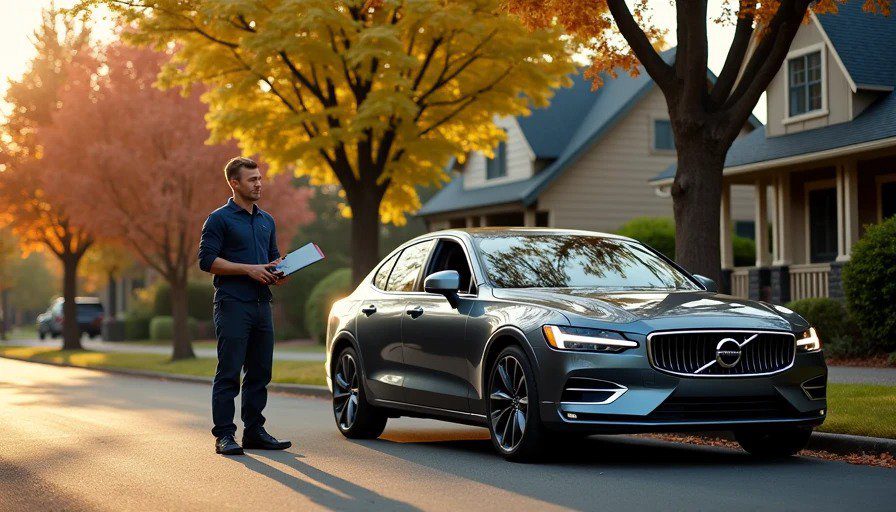
Let me tell you about the first time I worked on a 2019 S60.
It was a T6 Inscription, dark grey, 18,000 miles, owned by a software engineer who lived in the Pearl District. He'd bought it new, driven it gently, and brought it to me for its first post-warranty oil change. I put it on the lift, dropped the under-tray, and spent a solid minute just staring at the underside.
"This thing is clean," I said to my apprentice. "Like, weirdly clean. No oil weeps, no crusty coolant fittings, no subframe rust. This is not what I'm used to from a Volvo."
He looked at me like I'd just said the sky was blue. "Isn't that... good?"
It was. It was very good. And it was the moment I realised that the second-generation S60—the one that launched in 2019—was a completely different animal from the P3-platform cars that came before it.
Fast forward to today. I've had about twenty S60s through Keller Motor Works across all model years. I've seen the good, the bad, and the genuinely puzzling. And I've developed a clear, data-backed opinion that I'll share with you right now:
The 2019 and 2020 S60s are the best used luxury sedans nobody's shopping for. And the 2022 is the one you should actively avoid.
Here's why.
The S60: A Brief History
The S60 has been around since 2000. The first generation (P2) was a bit of a dinosaur—safe, solid, but not particularly dynamic. The second generation (P3, 2010–2018) was better, but it was built on Ford's EUCD platform, which meant it shared bones with the Mondeo and the previous-generation XC60. It was decent, but it was also heavy, understeery, and packed with electronics that aged poorly.
The third generation—the SPA platform car—launched in 2019. This is the one we're talking about.
SPA stands for Scalable Product Architecture, and it was Volvo's $11 billion bet on modularity. It underpins every modern Volvo—the XC90, the V90, the XC60, the S90, and the S60/V60. The platform is designed for hybridisation, safety, and handling. It's fundamentally a better car than anything Volvo built before it.
But here's the thing: the SPA cars are not all created equal. And the differences between model years matter more than you'd think.
The 2019–2020 Sweet Spot
Why 2019 and 2020? Three reasons.
Reason 1: The Powertrain Sweet Spot
The 2019–2020 S60 came with three engine options:
T5: 2.0-litre turbocharged four-cylinder, 250 hp, 258 lb-ft. Front-wheel drive or all-wheel drive.
T6: 2.0-litre supercharged and turbocharged four-cylinder, 316 hp, 295 lb-ft. All-wheel drive only.
T8: T6 + plug-in hybrid, 400 hp combined. All-wheel drive. Expensive and rare.
The T5 is the sensible choice. It's quick enough (0–60 in 6.2 seconds), it gets 28 mpg combined, and it's cheaper to maintain. The T6 is the enthusiast's choice—quicker, more responsive, and genuinely fun to drive.
Here's the key: Both the T5 and T6 in the 2019–2020 models use the same basic Drive-E engine architecture that I wrote about in the Martin's Bench post. The bottom end is identical. The turbocharger on the T5 is robust. The supercharger on the T6 is the same design that's been proven in the XC90 and V90.
But in 2021, Volvo made a change. They introduced a mild-hybrid system to the S60—a 48-volt starter-generator that adds about 14 horsepower and improves fuel economy. It's called the "B5" and "B6" nomenclature, and it sounds good on paper.
In practice? It added complexity. The 48-volt battery sits under the boot floor. The starter-generator is an extra component that can fail. The regenerative braking system adds another layer to the brake system—and when it breaks, it's expensive.
The 2019–2020 cars don't have this system. They're simpler, lighter, and—in my experience—more reliable.
Reason 2: The Infotainment is Sorted
The S60's infotainment system—Sensus—is the same vertical touchscreen that Volvo uses across the range. It's not perfect, and I've grumbled about it in other posts. But the 2019–2020 cars had the benefit of two years of software updates. The early bugs—screen freezes, camera delays, Bluetooth dropouts—were mostly ironed out by 2019.
The 2022 car got a new system: Google Automotive Services. It's the first Volvo to run Android Automotive natively, and it was a rocky launch. I'll get into that in a moment.
Reason 3: The Depreciation Has Stabilised
A 2019 S60 T5 with 40,000 miles is currently trading at about $22,000–$25,000 in the Pacific Northwest. A 2020 T6 with the same mileage is about $27,000–$30,000.
That's a 50% depreciation from the original MSRP of $45,000–$55,000. The car has lost most of its value, but it's not old enough to be high-maintenance. It's the sweet spot: you're buying a car that's still relatively modern, still reliable, and still has some warranty coverage (the powertrain warranty is 5 years/60,000 miles, so a 2020 model may still be covered until 2025).
The 2022 S60: What Went Wrong
The 2022 S60 received a facelift. It got a revised front grille, new headlights, and the new Google-powered infotainment system. It also got the mild-hybrid powertrain I mentioned earlier.
On paper, it should have been a step forward. In reality, it was a step sideways—and for buyers, it's a step you can skip.
Problem 1: The Google System Wasn't Ready
Volvo launched Google Automotive Services in the 2022 S60. It replaced the Sensus system with an interface built on Android Auto. It promised faster response times, better voice recognition (with Google Assistant), and over-the-air updates.
The reality, especially in the first year, was not pretty.
Glitches: The system would crash. Not just lag—full black-screen, five-minute-reboot crashes. I had two customers bring in their 2022 S60s with this problem. Volvo issued software updates, but the problem persisted for some cars.
Missing Features: The Google system didn't have all the features of the old Sensus system. Some owners complained about missing ambient lighting controls, reduced customisation options, and a less intuitive climate interface.
App Integration: The Google apps worked well, but third-party apps were slow to arrive. If you wanted to use the Volvo On Call app to pre-heat the car, you had to go through two layers of menus.
No CarPlay at Launch: Apple CarPlay wasn't available when the 2022 S60 launched. It was added in a later software update, but the early adopters waited months for it.
The 2023 models improved the software stability, but the 2022 was—and still is—the year to avoid if you care about the infotainment experience.
Problem 2: The Mild-Hybrid System Adds Complexity
The B5 and B6 engines introduced a 48-volt electrical system. The starter-generator is mounted between the engine and the transmission. It adds about 14 horsepower and 30 lb-ft of torque, but it also adds:
A 48-volt lithium-ion battery under the boot (about $1,800 to replace, expected lifespan 5–7 years).
A DC-DC converter to step down from 48V to 12V for the standard electronics.
More complex brake system integration—the regenerative braking uses the same pedal, but the calibration is different.
In the first year, we saw a few 2022 S60s with the 48-volt system throwing errors. The dealer software fixes were hit-or-miss. The system is more reliable now, but it's still an extra point of failure—and it's a point of failure that the 2019–2020 cars don't have.
Problem 3: The Suspension Recalibration
The 2022 S60 received a suspension retune. Volvo made the car slightly softer in Comfort mode and slightly firmer in Dynamic mode. In theory, it's more versatile. In practice, the Comfort mode is a bit too floaty for a car that's supposed to be a sport sedan—and the Dynamic mode is a bit too harsh for everyday driving.
The 2019–2020 cars have a more consistent suspension tune. It's not perfect, but it's honest. You know what you're getting.
Other Years to Consider (and Avoid)
Model Year | Verdict | Why |
|---|---|---|
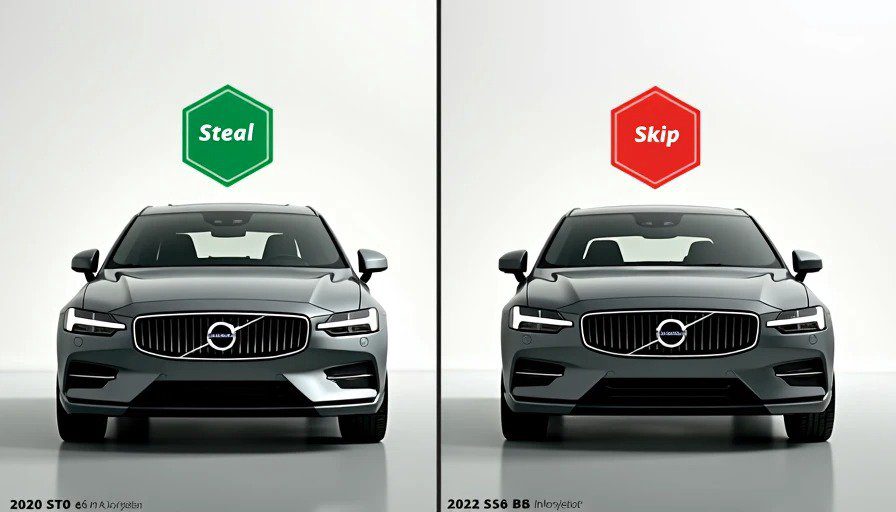
2019 | Steal | First year of SPA platform. All issues are known and fixable. Reliable powertrain. No 48-volt complexity. Good depreciation. |
2020 | Steal | Same as 2019, slightly better infotainment software. Some minor interior improvements. The sweetest spot. |
2021 | Consider | Same as 2020, but some cars have the mild-hybrid (B5/B6). If you find a T5 without the hybrid, it's a solid buy. But prices are higher. |
2022 | Skip | Google system was buggy. Mild-hybrid added complexity. Suspension retune is polarising. Avoid unless it's a screaming deal and you're prepared for software headaches. |
2023+ | Consider (if budget allows) | The Google system is more stable. The 48-volt issues have been resolved. But you're paying $35,000+ for a used one, and at that point, you're close to new-car money. |
The Repair Reality (What I've Seen)
I've worked on enough S60s to know the common issues. Here's the real-world data:
Common Issues (2019–2020)
Supercharger Clutch (T6 only): The electric clutch can fail around 60,000–80,000 miles. Same issue as the V90. Replacement is about $1,200 at an indie shop. It's not cheap, but it's predictable.
PCV Diaphragm: The crankcase ventilation system uses a rubber diaphragm that can fail, causing a whistling sound from the engine. The part is $20 and takes 30 minutes to replace. It's a DIY job if you're handy.
Sunroof Drain Clogs: Water from the panoramic sunroof can clog the drains, causing a wet headliner. This is not a Volvo-specific issue—it's a sunroof issue. The fix is to clear the drains with compressed air. I do it for free for any customer who asks.
Front Suspension Bushings: The lower control arm bushings can wear out around 50,000–60,000 miles, especially on rougher roads. You'll feel a clunk over speed bumps. Replacement is about $800 for both sides. I'd recommend aftermarket bushings that are slightly stiffer—they last longer.
Common Issues (2022+)
Infotainment System Glitches: Software crashes, screen freezes, app delays. Most are fixed by software updates, but some cars have persistent issues.
48-Volt Battery Failures: I've seen three 2022 S60s with 48-volt system errors. Two required battery replacements under warranty. The third had a DC-DC converter failure. This is not widespread—but it's a $2,000+ repair out of warranty.
Brake Pedal Feel: The regenerative braking calibration on the 2022 can make the brake pedal feel inconsistent. It's not a failure—it's just a calibration issue that some drivers find annoying.
What to Look For When You Test-Drive One
For 2019–2020:
Check the PCV system. Listen for a whistle from the engine at idle. If you hear it, budget $20 and 30 minutes to fix it.
Listen for the supercharger clutch. On the T6, take it for a drive. At low speeds, the supercharger should engage smoothly. If you hear a rattle or a sudden loss of low-end torque, the clutch is failing.
Check the oil level. The Drive-E engines can consume oil. Check the dipstick (yes, it has one). If it's below halfway, ask the seller when they last changed the oil.
Feel the transmission. The 8-speed Aisin is generally smooth. If it clunks on a 2-3 upshift, the fluid may be old. It's not a deal-breaker—just budget $400 for a fluid change.
Check the sunroof. Pour a small amount of water into the drain holes—if it pools, the drains are clogged.
For 2022:
Test the infotainment. Spend five minutes swiping, scrolling, and using the navigation. If it lags, crashes, or reboots, walk away.
Check the 48-volt system. Make sure there are no warning lights, and check the battery health through the vehicle's status screen.
Brake pedal feel. Drive it through city traffic. If the brake pedal feels inconsistent or grabby, you'll need to get used to it—or avoid it.
Ask about software updates. The 2022 cars have had multiple updates. The seller should be able to confirm the car is running the latest software.
The 2019 and 2020 Volvo S60—especially the T5 model—is a genuine steal. It's well-built, reliable, comfortable, and depreciated enough to be affordable without being old enough to be a money pit. The T6 adds performance without sacrificing reliability (as long as you budget for the supercharger clutch). The interior is beautiful, the safety systems are class-leading, and the driving experience is genuinely enjoyable.
The 2022 S60 is a car you should avoid. Not because it's a bad car, but because it was the first year of a new infotainment system and a new hybrid system—and both were launched before they were ready. The 2023 models fixed most of the issues, but the 2022 remains a troublesome year.
My Target: 2020 Volvo S60 T5 Inscription with all-wheel drive and the optional Bowers & Wilkins sound system. Under 45,000 miles. Budget around $25,000–$27,000. Get a pre-purchase inspection from an indie Volvo specialist.
If you can't find a 2020, a 2019 is almost as good. And if you find a 2021 that's a T5 without the 48-volt system, grab it—they exist, but they're rare.




No signals yet — transmit the first.