I've lost count of how many times I've had this conversation.
A customer comes into Keller Motor Works with a BMW X3 or an Audi Q5 that needs a $2,000 repair. They're frustrated. They're thinking about trading it in. They ask me: "What should I get instead?"
And I say: "Have you considered an Outback?"
They look at me like I just suggested they buy a pair of cargo shorts and a fanny pack. "An Outback? That's not... I mean, it's not really a luxury car, is it?"
"No," I say. "It's not. But it's the car that does everything your X3 does — and in some cases, does it better. It's just not trying to impress anyone."
They don't buy the Outback. They buy another German SUV. And then, two years later, they're back in my shop with the same complaint.
I've stopped trying to convince people. Instead, I just show them the numbers.
The Outback Problem
The Subaru Outback has an image problem. It's the car your friend's dad drives. It's the car that shows up at REI parking lots. It's the car that's practical, sensible, and thoroughly unsexy.
And that's exactly why nobody admits they want one.
But here's the thing: the Outback is one of the best cars on the market for real-world family life. It's reliable, it's safe, it's practical, and it's genuinely capable. It's also significantly cheaper to own than any German SUV — and in many ways, it's a better car for the 95% of driving that most people actually do.
I've owned an Outback. I've recommended Outbacks to dozens of customers. I've fixed Outbacks for years. And I've developed a simple conclusion:
The Subaru Outback is the best car nobody admits they want. And if you can get past the image, it might be the best car for you.
What the Outback Actually Is
Let's start with the basics.
The Outback is a mid‑size station wagon with raised ground clearance and standard all‑wheel drive. It's built on the Subaru Global Platform, which also underpins the Legacy and the Ascent.
The current generation (2020+) comes with two engine options:
2.5‑litre flat‑four: 182 hp, 176 lb‑ft. It's adequate. It's not fast, but it's not slow. It gets 29 mpg combined.
2.4‑litre turbocharged flat‑four: 260 hp, 277 lb‑ft. This is the one you want. It's quick, responsive, and gets 26 mpg combined.
Both engines are paired with a CVT (continuously variable transmission) that Subaru has refined over the years. It's not as sporty as a traditional automatic, but it's smooth and efficient.
The Outback has 9.5 inches of ground clearance — enough for light off‑roading, deep snow, and poorly maintained forest service roads. It has a roof rack that can carry up to 700 pounds. It has a tow rating of 2,700 pounds (3,500 on the turbo model). It has a cargo area that's genuinely cavernous — 32.5 cubic feet behind the rear seats, 75.7 cubic feet with the seats folded.
On paper, the Outback is a practical, capable, and efficient family hauler.
In reality, it's a car that punches above its weight in almost every metric.
Why It's Better Than You Think
1. The Cargo Space (It's a Wagon, Not an SUV)
Here's the secret that nobody talks about: wagons have better cargo space than SUVs.
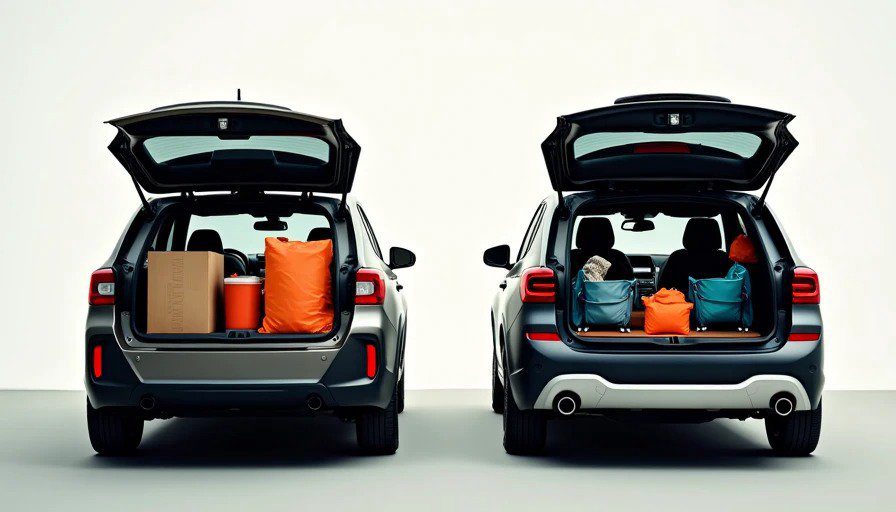
The Outback has 32.5 cubic feet behind the rear seats. That's more than the BMW X3 (28.7), the Audi Q5 (25.1), and the Mercedes GLC (19.4). It's even more than the Volvo XC60 (22.4).
When you fold the rear seats, the Outback has 75.7 cubic feet. That's larger than the X3 (62.7), the Q5 (54.0), and the GLC (56.5).
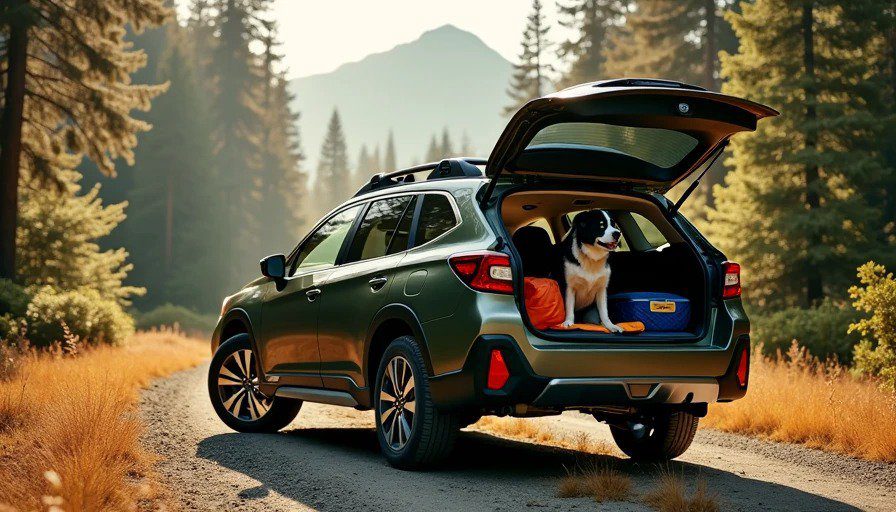
The cargo area is also more usable. The load height is lower than an SUV, which means you don't have to lift heavy items as high. The cargo opening is wide and square, so you can fit bulky items easily. And the rear seats fold nearly flat, creating a continuous surface that's perfect for camping gear, Ikea flat‑packs, or a 22‑kilogram border collie who likes to stretch out.
Socket's take: He jumped into the Outback without hesitation. He stood up, turned around, and lay down with his head on the rear seat backs. He had plenty of room. He gave it a tail‑wag of approval — and Socket is a tough critic.
2. The Symmetrical All‑Wheel Drive
Subaru's symmetrical all‑wheel drive is one of the best systems on the market. It's not a reactive system that kicks in after you lose traction — it's always on, distributing power to all four wheels in a balanced, predictable way.
In Portland's rain, on snow‑covered highways, or on muddy forest service roads, the Outback is unstoppable. It doesn't slip. It doesn't slide. It just goes.
The system is also incredibly durable. I've worked on Outbacks with 150,000+ miles on the original drivetrain. The wheel bearings, the CV joints, the differentials — they all hold up remarkably well.
What this means in the real world: You don't need winter tyres (though they help). You don't need to worry about getting stuck. You can drive confidently in conditions that would make a 5‑Series or E‑Class driver nervous.
3. The Reliability
This is the big one.
The Outback is significantly more reliable than any German luxury SUV. The 2.5‑litre flat‑four is one of the most durable engines on the market. The 2.4‑litre turbo is also solid — it's the same engine used in the Ascent and the Legacy XT.
What I've seen on the lift:
Engine: I've replaced one flat‑four in my entire career. It was a 2010 model with 180,000 miles that had been severely neglected. The current engines are even better.
Transmission: The CVT had some issues in the early 2010s, but Subaru has refined it significantly. The 2020+ CVTs are smooth and reliable.
Suspension: Simple, durable, and cheap to repair.
Brakes: The brakes are adequate and long‑lasting.
Electronics: The infotainment system can be glitchy (more on this later), but the core electronics are robust.
The bottom line: An Outback will cost you significantly less to maintain than any German luxury SUV. The parts are cheaper, the labour is easier, and the car is less likely to break in the first place.
4. The Visibility
This is the one thing that luxury SUVs consistently fail at. The pillars are thick. The windows are small. The rear visibility is terrible.
The Outback is the opposite. The greenhouse is large. The windows are generous. You can see everything around you. It's a car that makes you feel confident, not claustrophobic.
Claire's take: "I can actually see the corners of the car. In the X3, I had to guess where the front bumper was. In the Outback, I know exactly where I am."
5. The Safety
Subaru's EyeSight system is one of the best driver‑assistance packages on the market. It includes:
Adaptive cruise control: Smooth, responsive, and intuitive.
Lane‑keeping assist: Gentle and non‑intrusive.
Pre‑collision braking: It works. I've seen it save at least two customers from rear‑end collisions.
Lead vehicle start alert: A small touch, but useful in traffic.
The Outback also has excellent crash test ratings. It's one of the safest cars on the road — and at $35,000, it's safer than many cars that cost twice as much.
6. The Ground Clearance
9.5 inches of ground clearance is remarkable for a car that doesn't look like an off‑roader. It's the same as the Jeep Grand Cherokee. It's more than the Toyota Highlander, the Ford Explorer, and even the Volvo XC90.
What this means: You can drive on snow‑covered roads without bottoming out. You can go down unpaved forest service roads without scraping the undercarriage. You can park on the grass at a festival without worrying about getting stuck.
What this doesn't mean: It's not a rock‑crawler. It's not a Rubicon. But for 99% of the driving that 99% of people do, it's more than enough.
7. The Value
Here's the real kicker.
A new Outback Touring XT (the top trim with the turbo engine) costs about $42,000. A new BMW X3 xDrive30i starts at $48,000 — and that's with the base engine, before you add any options. A well‑equipped X3 is $55,000‑$60,000.
Used, the gap is even larger. A 2021 Outback Touring XT with 30,000 miles is about $35,000. A 2021 X3 xDrive30i with the same mileage is about $42,000‑$45,000.
The Outback saves you $7,000‑$10,000 up front — and it's cheaper to maintain, cheaper to insure, and cheaper to fuel.
The Caveats
I'm not going to pretend the Outback is perfect. It has weaknesses, and you need to know them before you buy.
1. The CVT Is... a CVT
The continuously variable transmission is efficient and smooth, but it's not engaging. It drones. It doesn't shift gears (because it doesn't have gears). It's the opposite of a sporty driving experience.
If you're the kind of driver who loves the feel of a traditional automatic or a manual transmission, the Outback will disappoint you. It's a car for cruising, not for carving corners.
Who this matters to: People who enjoy driving as an activity. If you're a BMW or Mazda driver, the Outback will feel numb.
2. The Infotainment System Is Glitchy
The 11.6‑inch vertical touchscreen is a great idea, but the execution is inconsistent. The system can lag, freeze, or reboot unexpectedly. The climate controls are buried in menus, which is annoying. The wireless Apple CarPlay and Android Auto can be finicky.
Subaru has issued software updates, and the 2024+ models are better, but the system is still not as polished as the BMW iDrive or the Genesis system.
My advice: Test the infotainment thoroughly during your test drive. Spend five minutes swiping, scrolling, and using the navigation. If it lags, wait for a software update — or buy a 2024+ model.
3. The Interior Is Not Luxurious
The Outback's interior is comfortable and well‑designed, but it's not premium. The plastics are hard in places. The leather is not as soft as Volvo's Nappa. The design is functional, not beautiful.
If you're coming from a BMW X3 or a Volvo XC60, the Outback will feel like a step down in materials quality. It's not cheap — it's just not luxury.
Who this matters to: People who care about interior aesthetics and materials. If you want a car that feels special every time you open the door, the Outback is not it.
4. The Fuel Economy Is Good, But Not Exceptional
The 2.5‑litre Outback gets 29 mpg combined. That's excellent for an all‑wheel‑drive wagon. The turbo gets 26 mpg, which is still good — better than most luxury SUVs.
But it's not as efficient as a hybrid or a plug‑in hybrid. If fuel economy is your primary concern, you might want to look at the Toyota RAV4 Hybrid or the Hyundai Santa Fe Hybrid.
5. The Steering Is Light
The Outback's steering is light and easy — which is great for parking and city driving. But it's not communicative. You don't feel the road. You don't get the feedback that a BMW or a Mazda delivers.
It's a car that isolates you from the driving experience. For some people, that's a feature. For others, it's a bug.
The Repair Reality (What I've Seen)
I've worked on Outbacks for years, and here's the honest breakdown:
The good:
The engine is reliable. The 2.5‑litre is nearly bulletproof. The 2.4‑litre turbo is also solid.
The suspension is durable. The bushings, control arms, and struts hold up well.
The brakes are adequate and long‑lasting.
The all‑wheel‑drive system is robust.
The exhaust system is well‑made.
The known issues:
CVT fluid: Subaru says the CVT fluid is "lifetime," but I recommend changing it every 60,000 miles. It's about $400, and it can prevent transmission failures.
Infotainment software: The system can glitch, as I mentioned. The updates are free, but they can be frustrating.
Tyre wear: The Outback's symmetrical AWD system requires all four tyres to have the same tread depth. If you run mismatched tyres, you can damage the differential.
Battery drain: Some Outbacks have had parasitic battery drain issues. A software update fixes it, but it's a known problem.
Oil consumption: The 2.5‑litre engine can consume oil at high mileage. It's not as bad as the early Volvo Drive‑Es, but it's something to monitor.
Verdict: The Outback is one of the most reliable cars in its class. It's not perfect, but the issues are manageable and rare.
The Family Test
I put the Outback through the Keller family test.
Mia's take: She loved the rear seat. The legroom is generous, the rear air vents work well, and the rear window is big enough for her to see out of. She said: "It's like a big bedroom back here. Can we get this one?"
Socket's take: He jumped in without hesitation. He stretched out, sighed, and gave me a look that said: "This is acceptable. I'll allow it."
Claire's take: She drove it for two days. Her feedback: "It's easy to drive. The visibility is great. The steering is light, which I like. But the infotainment screen is frustrating — I couldn't figure out how to adjust the climate control without taking my eyes off the road."
My take: The Outback is a car that does everything well. It's not exciting, but it's not supposed to be. It's reliable, practical, and capable. It's the car you buy when you stop caring about what your car says about you and start caring about what it does for you.
The Outback Buyer's Guide
If I've convinced you to consider an Outback, here's what you need to know:
Model Years
2015‑2019 (5th generation): Good cars, but the infotainment is dated. The 2.5‑litre is solid, but the 3.6‑litre V6 (available until 2019) is the one to get — it's smooth, powerful, and reliable. The CVT in these years is less refined than the newer models.
2020‑2022 (6th generation, early): Major upgrade. The new platform is stiffer, the interior is better, and the turbo engine is available. But the infotainment system is glitchy. If you buy one, make sure it's had the software updates.
2023‑2024 (6th generation, updated): The infotainment system is improved. The wireless Apple CarPlay and Android Auto are more reliable. The overall package is excellent.
2025+ (current): The best Outback ever built. The infotainment is mostly sorted. The turbo engine is responsive. The safety systems are class‑leading.
My target: 2023‑2024 Outback Touring XT, under 30,000 miles. Budget $35,000‑$38,000. If that's too expensive, a 2020‑2022 with the updated software is also a solid buy.
What to Look For (Pre‑Purchase Inspection)
Check the CVT fluid. Subaru claims it's lifetime, but I'd ask the seller for records of a CVT fluid change at 60,000 miles. If there's no record, budget $400 for a fluid change.
Listen for suspension clunks. The front lower control arm bushings can wear out. If you hear a clunk over speed bumps, budget $800 for replacement.
Check the infotainment. Spend five minutes playing with the screen. If it lags or freezes, ask if the software is up‑to‑date.
Check the battery. Parasitic battery drain is a known issue. Ask the seller if the battery has been replaced or if the car has had the software update.
Check the tyres. All four tyres should have the same tread depth. If they're mismatched, budget $800‑$1,000 for a new set.
The Outback Trims
Base: Decent, but you'll want more features.
Premium: The sweet spot. Good value.
Limited: The comfort upgrade. Leather seats, heated steering wheel, upgraded sound system.
Touring: The luxury trim. Nappa leather, ventilated seats, 360‑degree camera.
Wilderness: The off‑road trim. Raised suspension, all‑terrain tyres, skid plates. If you actually go off‑road, this is the one.
My recommendation: The Touring XT (with the turbo engine). It's the best of all worlds — comfortable, powerful, and well‑equipped.
The Subaru Outback is not the coolest car on the road. It's not the sportiest. It's not the most luxurious. But it's one of the best cars for real‑world family life — and it's significantly cheaper to own than any German luxury SUV.
If you can get past the image — if you can accept that your car is a tool, not a status symbol — the Outback is the best car nobody admits they want.
And once you own one, you'll understand why so many people drive them, even if they won't admit it.
A 2023‑2024 Outback Touring XT is a better car for most families than a 2021 BMW X3. It's more practical, more reliable, cheaper to maintain, and — in the ways that actually matter — more capable.
It's just not as flashy.
If that's a problem for you, buy the BMW. You'll enjoy the badge, and you'll pay for the privilege. But if you want a car that works, that lasts, and that makes your life easier — the Outback is the answer.


No signals yet — transmit the first.