A customer rolled into the shop last month with a 1988 Toyota Corolla that had 287,000 miles on the clock. He bought it from his uncle for $800 and wondered if it was worth fixing. That’s the same question I get about every aging Corolla of this generation. My answer is usually yes, with a few caveats. The 1988 Toyota Corolla is one of the last truly simple economy cars that still parts out easily and refuses to die.
But you have to know what you’re looking at. The 1988 model kicked off the E90 generation in the US, with a 1.6-liter DOHC 4A-FE four-cylinder. It made about 102 horsepower, which sounds laughable today, but it moved a 2,200-pound car with enough zip for city driving. The fuel injection was dependable, the timing chain didn’t need constant attention, and the body held up better than most of its rivals.
That’s the short version. Here’s the longer walk around the car.
Why the 1988 Toyota Corolla Still Makes Sense
The biggest reason to consider this car in 2025 is durability. The 4A-FE engine is a workhorse. I’ve seen these engines pass 350,000 miles with basic oil changes and a valve cover gasket. The five-speed manual shifts smoothly after decades of use. The four-speed automatic is less refined but still tough. And because the Corolla sold in huge numbers, junkyards have plenty of parts.
The 1988 Toyota Corolla doesn’t offer charm or modern safety. What it offers is predictability. You know what you’re getting: a small, light sedan that gets 30 miles per gallon on a good week, costs almost nothing to insure, and doesn’t complain when parked on a city street. For a cheap commuter or a teenager’s first car, it beats newer cars with interference engines and failing CVTs.
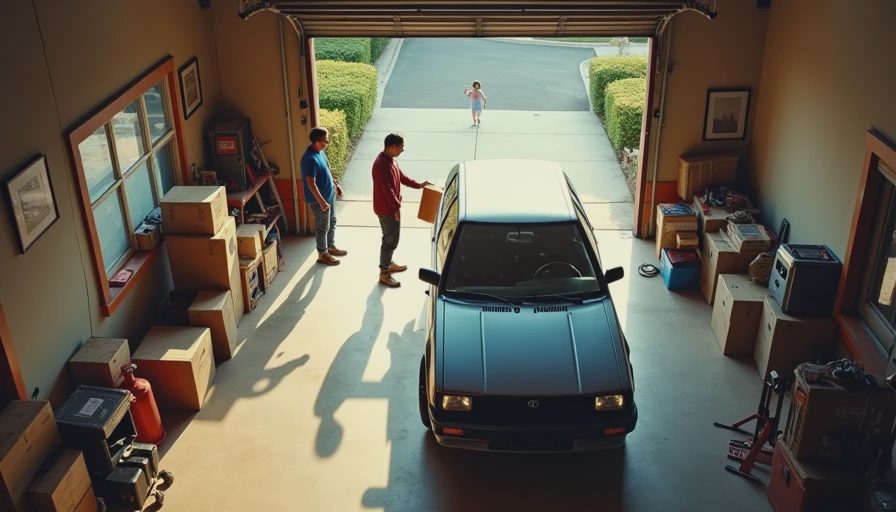
That’s the broad picture. But not every 1988 Corolla is a garage queen. Most are beat-up, rusty, and tired. So you need to look at the car itself, not the badge.
What to Look For When Buying One
Rust is the number one enemy. Check the rear wheel arches, rocker panels, and floor pans. If the sills are rotten, walk away. The engine is usually fine, but check for oil leaks around the valve cover and oil pan. A little sweat is normal; a steady drip means a gasket job. The timing chain is another thing to listen for. A rattling chain at startup can mean a worn tensioner, a moderate repair. The cooling system is a weak point. Radiators on these cars clog and crack after three decades. If the temperature gauge creeps up, budget $150 for a radiator, hoses, and thermostat.
A test drive matters. Listen for a rattle from the exhaust, a vibration at highway speed, or a pull to one side. These clues point to axle issues, engine mounts, or a bent frame. Don’t let a dead battery mask a charging problem. Bring a jump box and watch the dash lights.
The interior is basic but hard-wearing. You’re not buying this car for comfort. You’re buying it because it starts every morning and doesn’t drain your wallet.
What It Costs to Own a 1988 Toyota Corolla
Purchase price is the easy part. In today’s market, a clean, running 1988 Toyota Corolla goes for $1,500 to $4,000 depending on condition and location. The ones with 200,000 miles and some dings go for less. The dry and original ones are climbing in value because nostalgia is powerful. But even a $2,500 example will need some deferred maintenance. Plan on a fresh battery ($130), tires ($400), a fluid flush ($150), and likely a radiator ($150). That puts you around $3,500 total. Compare that to a $20,000 used car with a payment and full coverage. The Corolla saves you thousands per year.

Insurance is ridiculously cheap. Liability-only coverage on a 1988 Toyota Corolla often runs under $30 a month. You won’t need comprehensive or collision. Parts are still available from aftermarket suppliers, and a used transmission is $300 or less.
Should You Buy a 1988 Toyota Corolla in 2025?
If you expect silence, modern safety, and USB ports, no. If you need a cheap, honest car you can fix with basic tools, yes. It’s a great second car, first car, or beater that lets you save for something nicer. The main drawback is safety. This car has no airbags for the driver, and crumple zones are nonexistent by modern standards. That’s why I’d hesitate to recommend it as a daily highway commuter. For around-town driving, the risk is lower. Just be honest about what you’re buying.
Another consideration: emissions and inspection. Some states still test old cars, and a 1988 Corolla with a bad oxygen sensor or vacuum leak might fail. But these cars are so simple that most issues are easy to fix. A basic tune-up, a new O2 sensor, and clean fuel usually get them through.
Final Thought
The 1988 Toyota Corolla isn’t a collector’s item yet, but it’s close. Clean, rust-free examples are getting harder to find. If you spot one for a fair price, that’s a solid buy. Keep up with fluid changes, fix small things before they become big, and it will likely outlast the car parked next to it.
The data is for the engineers. The feel is yours. For this car, the feel is pure reliability.





No signals yet — transmit the first.