When customers ask me if there's a Honda Fit Type R, I usually tell them the same thing: sort of, but not really. In 2002, Honda UK built a one-off Jazz Type R with the K20A engine from the Civic Type R, then parked it in a museum. That car is the closest the world ever got to a factory version of the Fit with a Type R badge, and it never made it past the concept stage. For American buyers, the Fit has always been the sensible compact hatchback — reliable, cheap, and about as exciting as a spreadsheet. But that hasn't stopped thousands of owners from wondering what the sporty version would feel like. Let's dig into what happened with the concept, what Honda actually sold, and whether it makes sense to build your own.
The One-Off That Started the Myth
The 2002 Honda Jazz Type R concept (the Jazz is the Fit's name outside North America) was a proper left-field move. Honda UK dropped in a naturally aspirated 2.0-liter K20A engine — the same unit found in the Civic Type R — which pushed the tiny hatch into genuine hot hatch territory. It was never offered for sale, but it planted a seed. Enthusiasts have been waiting ever since for a production version. It never came.
What Honda Actually Offered Enthusiasts
Instead of a Type R, Honda gave us the Fit RS in Japan, the Fit Sport in the US, and a handful of limited-edition Mugen models. The RS trim brought stiffer springs, a rear sway bar, and a manual transmission option. But it was never a true hot hatch. The 1.5-liter engine made around 120 horsepower in the US market — lively, but not Civic Si territory. The driving position, the shifter, and the pedals are spot-on, but the engine leaves you wanting more. That's the gap every dream of a Honda Fit Type R is trying to fill.
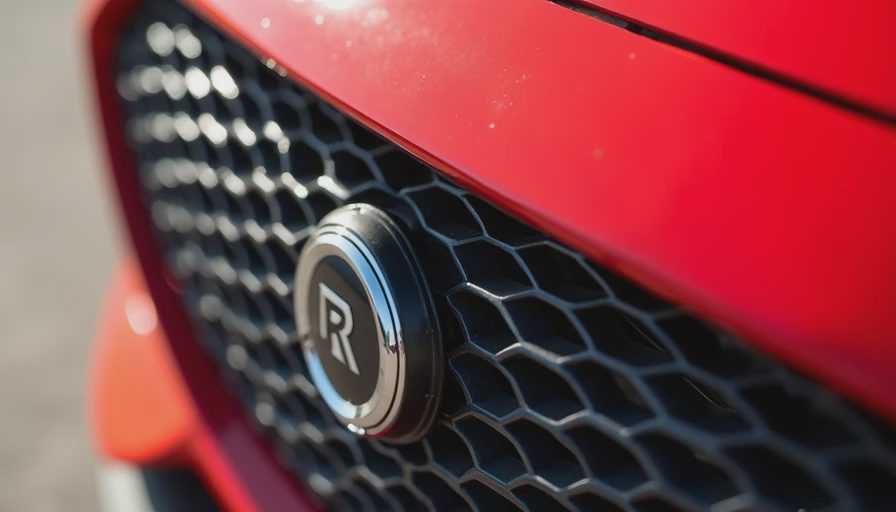
Why Honda Never Greenlit a Honda Fit Type R
The business case never made sense. The Fit was designed to be cheap to build and own. Add a high-strung engine, bigger brakes, and a limited-slip differential, and the price balloons. Honda would have been competing with its own Civic Si, which already had the Type R halo. The Fit's platform, while brilliant for a subcompact, wasn't engineered for 200-plus horsepower. It would have needed serious reinforcement to handle that kind of torque. The chassis stiffness is adequate for economy duty, but a Type R needs rigidity to keep the rear suspension from feeling like a noodle. Honda did the math and decided the ceiling was too low.
Can You Build Your Own? Yes, and People Do
If you want a Honda Fit Type R today, the only realistic way is to build one. The most common swap is a K20 from a Civic Type R or Acura RSX Type S. It mates to the Fit's engine mounts with some fabrication. You'll need a new ECU, custom harness, and a clutch that can handle the power. A complete K20 swap runs $6,000 to $10,000 in parts and labor at a shop like mine. You can spend less if you pull the engine yourself, but wiring is where most builds die.
Beyond the engine, the Fit's suspension needs work. Coilovers from HKS or Tein, a thicker rear sway bar, and a set of sticky tires transform the car. The stock Fit brakes are okay for a 1.5-liter, but they want attention when you double the power. Bigger rotors and at least a performance pad are non-negotiable. If you're looking at a 2009-2013 second-generation Fit, budget another $1,500 for sway bars, coilovers, and brake lines. The third-generation car (2015-2020) has a slightly stiffer chassis, which makes it the better starting point for a serious build.
The Feel Is What Matters
I've driven swapped Fits and they're a riot. The short wheelbase, the rev-happy K20, the way the rear gets light when the road gets tight. It's not a Civic Type R with a smaller body. It's something weirder. The data — the lap times, the skidpad numbers — is for the engineers. The feel is yours.
If you're shopping for an actual Honda Fit Type R today, you're looking at a nonexistent new-car market. The one-off Jazz concept isn't for sale. Your options are a clean first-generation Fit (2007-2008), a second-gen (2009-2013), or a third-gen (2015-2020). All are cheap to buy and even cheaper to run. A well-maintained example with the manual will cost you between $5,000 and $12,000 depending on your area. You'll want to check for rust on the rear subframe, especially in the salt belt. The engine is nearly indestructible, but the fuel pump relay is a known weak spot. Plan to replace the engine mounts at around 100,000 miles.
Should You Buy a Fit and Mod It, or Get Something Else?
If you've got a garage and a wiring harness tolerance for pain, a swapped Fit is one of the best undercover projects on the market. For around $15,000 total, you can have a car that handles like a go-kart and still fits a week of camping gear. If you'd rather buy something ready to go, look at the Civic Si, the VW GTI, or even the Veloster N. These are built for the job and come with a warranty. The Fit's biggest strength remains its original mission: seating five, hauling groceries, and returning 35 mpg without complaint.
For most people, a plain Honda Fit is the right answer. For the ones who ask about the sporty Fit, well, the doctor is in. We can build you one.





No signals yet — transmit the first.