Manual Transmission Purists Are Refusing to Accept Reality
Every week someone rolls into Keller Motor Works and asks if I can swap a manual into a car that never offered one. I get it. The clutch pedal is the last analog connection between driver and machine, and losing it feels like losing a language. But manual transmission purists are refusing to accept reality, and the reality is that the industry has already moved on. Last year, fewer than two percent of new cars sold in the United States had a manual gearbox. That number has been dropping for a decade, and there is no sign it will bounce back. The feel is yours. But the feel doesn't sell new cars, and it doesn't pass emissions in some states anymore.
What the Sales Charts Actually Show
When I started turning wrenches in the mid-2000s, you could still find a stick shift on a base econobox, a mid-size sedan, and a few trucks. Today, if a model still offers one, it is usually on the highest trim with the biggest engine, and the automaker prices it like a collector option. The 2024 and 2025 model years made this even clearer. Ford, Chevrolet, and Dodge have all killed the manual on their performance cars. Even the Golf GTI, long the default answer for practical manual fun, now only offers the gearbox on certain trims over the years. The manuals that remain are either halo cars like the Mazda MX-5 Miata and the Subaru BRZ, or heavy-duty trucks where a stick still serves a purpose.
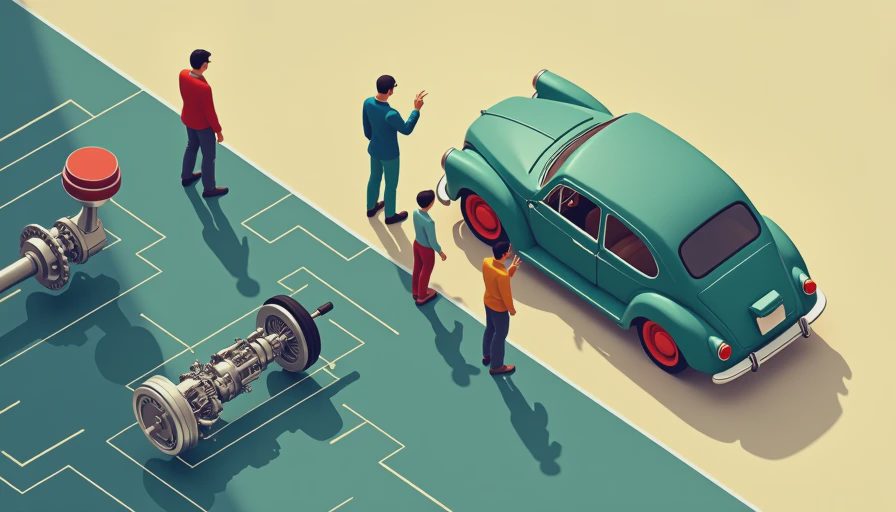
This shift is not happening because engineers forgot how to build a good shifter. It is happening because the car around the gearbox is changing. Hybrid powertrains increasingly rely on the electric motor to fill in torque gaps, and a traditional manual transmission fights that logic. When a car has a compact battery pack and a motor-generator unit, you cannot just bolt on a clutch pedal assembly from the 1990s. And the next wave of EVs does not even have a gearbox to shift in the traditional sense. That is the reality, and manual transmission purists are refusing to accept reality at their own expense. If you order a new car with a manual today, you are already on a short list.
What I See in the Shop
As a mechanic, I see the other side of this. Three times last month, someone brought in a ten-year-old Subaru or Mazda3 with a manual because their new-car search came up empty. They would bounce between dealerships, find maybe one stick shift in stock in the entire metro area, and end up either ordering blind or driving home in something they did not love. Parts are also getting harder to source. A common clutch master cylinder for a 2015 model used to be a same-day order. Now it is a two-week wait because the supplier has shifted production.
But the used market still rewards the buyer who wants a manual. Because demand is steady and supply is shrinking, a clean, low-mileage stick shift from a reliable brand holds its value better than most people expect. I recently saw a 2019 Mazda MX-5 with a manual sell for close to the original sticker price. You will not get that with a comparable automatic. If you are willing to buy slightly used and skip the new-car lot, you can get into a genuinely fun car without paying the current new-car premium.

The Real Problem Isn't the Gearbox — It's the Car Around It
The manual transmission was never the fragile part. The clutch, the synchros, the shift linkage — those are all well-understood and fixable. The real problem is that automakers are no longer designing the rest of the car around a manual. For example, the rev-matching systems on modern performance cars are brilliant, but they hint at another truth: the driver who reaches for the shift lever is no longer a beginner. The seating position, pedal offset, and shifter height still vary wildly. A forty-minute test drive in a modern manual will tell you more than any spec sheet. If your left leg aches or your wrist catches the center console on every shift, that is reality telling you something. The new cars that still offer a manual often make you pay for the privilege with a higher trim package, adding two to five thousand dollars to the purchase price.
Where Purists Can Still Get Their Fix
If you still want a third pedal, here is the honest list. Manual transmission purists are refusing to accept reality, but you can still buy one of these. The Mazda MX-5 Miata remains the gold standard, and you can buy one new with a manual. The Honda Civic Si is still sold with a stick. The Subaru BRZ and its twin, the Toyota GR86, offer one of the best shifters available under thirty thousand dollars. A Porsche 911 still offers a manual on select trims, but you will pay a premium. Beyond that, you are looking at the used market. A late-model Volkswagen GTI with a manual is worth seeking out if you can find one that hasn't been wrecked or tuned to death.
That collection is not going to grow. The platforms are aging out, and the next generation of these cars will almost certainly be automatic-only. Some brands are toying with fake manual modes on EVs, but a simulated clutch doesn't change the fundamentals. I know manual transmission purists are refusing to accept reality, and I don't blame them. But the manual is becoming a specialty item, like a mechanical watch or a film camera. Enjoy it while it lasts, but don't pretend the market is going to come back. The data is for the engineers. The feel is yours. Accept the reality, and you can still find a car that puts a smile on your face every time you grab that shifter.


No signals yet — transmit the first.