If you're shopping for a 600-horsepower SUV, you've probably looked at the RSQ8 vs Urus. They share the same chassis, the same 4.0-liter twin-turbo V8, and the same eight-speed automatic. The Audi starts around $125,000. The Lamborghini starts near $230,000. That's a six-figure gap for what is, under the skin, the same truck.
The Urus exists because it's a Lamborghini, and people love the noise. But when you're paying your own repair bills, the badge matters less than the part number. I've spent years in dealer training programs, and I can tell you exactly how much of this car is shared and how much is just trim.
Under the Skin: Same Engine, Different Mood
Both use the VW Group's 4.0-liter TFSI V8. The Urus makes about 641 horsepower; the RSQ8 makes 591. The difference comes down to boost pressure, exhaust tuning, and a freer intake on the Lambo. Both use the same ZF eight-speed and the same permanent all-wheel drive.
In my shop, I've had three of these on the lift with the same coolant crossover pipe leak. The part is identical. Audi charges around $400 for it. Lamborghini charges $900 because the box says Lamborghini. That's the whole comparison in one repair order.
The Urus is sharper and louder, but mechanically it's the same engine wearing a fancy suit. The calibration is more aggressive, the exhaust is a work of art, and the throttle response will wake you up. But it's the same block, same turbos, same transmission.
The Family Test: Does It Work for Daily Life?
Here's where the RSQ8 vs Urus stops being a spec sheet. The Audi is taller and boxier, so three real adults fit in the back seat with actual headroom. The Urus trades that space for a dramatic coupe-like roofline, and the rear seats sit lower, like a sports car.

Claire drove both at the Portland auto show. She works twelve-hour shifts at OHSU and said the RSQ8's air suspension in Comfort mode felt like a normal luxury SUV. The Urus, even in its softest setting, never stopped fidgeting over the same broken pavement we'd just traveled.
Mia can open the RSQ8's door herself. The Urus's heavy frameless doors take muscle, and the high sills make getting in and out a chore for a six-year-old. Socket, our border collie, can jump into the Audi's cargo area without a running start. The Lambo's load sill is about four inches higher, and the cargo opening is tighter.
The RSQ8 is also quieter inside. Wind and road noise are suppressed. The Urus is louder in every way, and after 90 minutes on the highway, the drama starts to wear thin. That matters if you daily-drive it.
The Cost of the Bull: What a Lamborghini Really Costs to Run
Let's talk money, because the RSQ8 vs Urus is a $100,000 question with a $100,000 follow-up.
Insurance is the first shock. A Urus in the Portland metro can cost $6,000 to $9,000 a year, depending on your record. The RSQ8 typically runs half that. The VIN alone puts the Lambo in a different underwriting class, and that difference shows up in every renewal.
Maintenance is where the gap gets silly. A routine oil change on the Urus at a Lamborghini dealer is around $1,200. The same service on the RSQ8 at a good independent shop is $300. The Urus also requires additional fluid services for its performance calibration, so the gap widens every time you visit the shop.
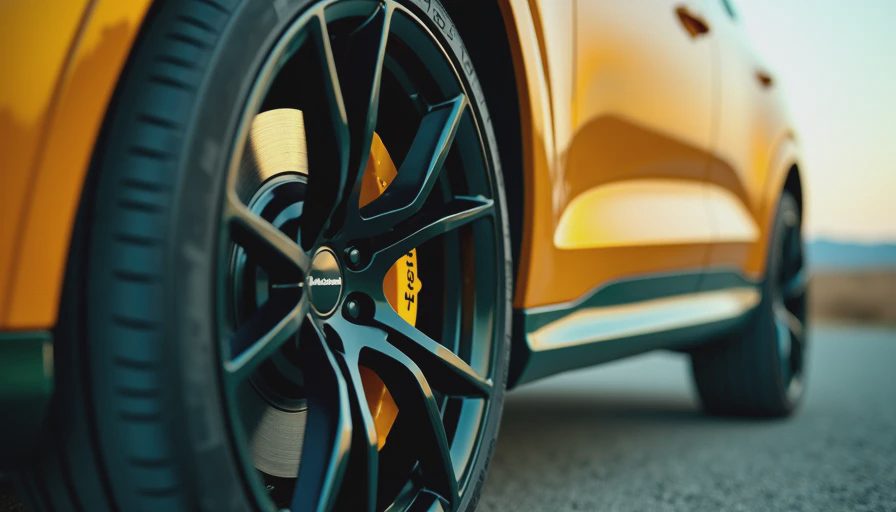
Brakes are a bigger problem. The Urus comes with carbon-ceramic rotors as standard, and a full brake job runs $8,000 to $12,000 at the dealer. The RSQ8's steel rotors can be replaced for about $3,500, and you can even upgrade to aftermarket components for less than half the Lambo's price.
Tires follow the same pattern. A set of performance tires for the Urus runs about $2,500 installed; the RSQ8 uses slightly smaller rubber and comes in closer to $1,800. Both are expensive, but the Urus sits on staggered wheels that require more frequent replacement, and the tire shop will quote you a premium just for the size.
What a Mechanic Would Actually Tell a Friend
I'm not anti-Lamborghini. If you want theater, the Urus delivers. The styling is wild, the interior is Alcantara and carbon fiber, and the engine note is genuinely intoxicating. It's an event every time you press the start button.
But as someone who has wrenched on both, I'd tell a friend to buy the RSQ8. When you boil down the RSQ8 vs Urus to real-world costs, the answer gets obvious. You get 95 percent of the performance, a much better ride, a more usable rear seat, and a monthly ownership cost that won't make your accountant wince. The other five percent is the badge, and you pay an extra hundred grand for it.
Test drive both on the same road. Then do the math on five years of ownership, including insurance, tires, brakes, and the inevitable small warranty claims. The data is for the engineers. The feel is yours. For most people, the RSQ8 vs Urus decision ends with a tow hitch and a roof box, not a bull on the hood.
And if you're thinking about a used one, the RSQ8 is the smarter bet. Parts are common and independent shops like mine can get them cheap. A used Urus is a lottery ticket: the engine will be fine, but every body panel, sensor, and interior trim piece will remind you it's a Lamborghini.





No signals yet — transmit the first.