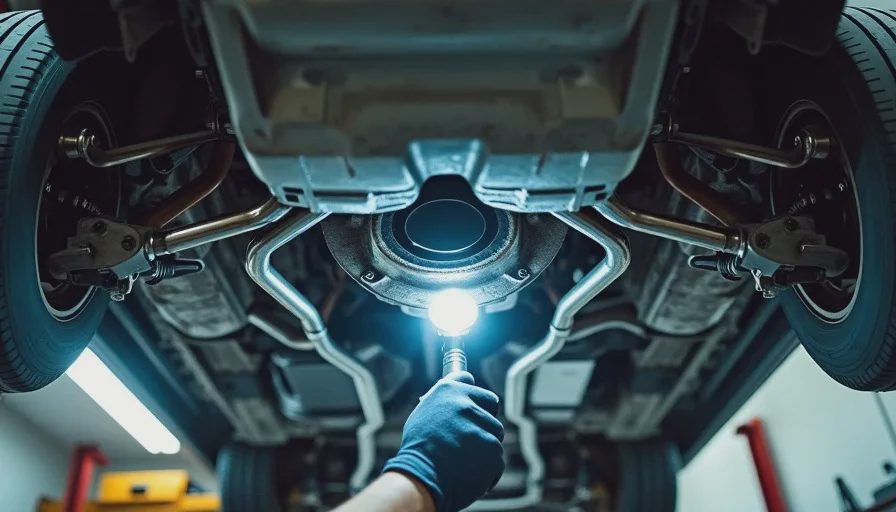
There's a moment that happens almost every time I put a Subaru on the lift.
I'm underneath the car, looking up at the engine — and it's right there, staring back at me. The flat-four, the boxer, the horizontally opposed engine that makes Subaru, well, Subaru. You can't miss it. The cylinders are spread out like wings, the spark plugs are poking out of the sides, and the exhaust headers snake around the bottom like a plumbing project that got out of hand.
It's a weird engine. It's also one of the most durable engines ever built.
I've worked on Subaru boxer engines for fifteen years. I've seen them at 20,000 miles and at 200,000 miles. I've fixed the common failures and I've seen the unusual ones. And I've developed a clear, data-backed opinion:
The Subaru boxer engine is one of the most reliable engines on the market — but it's not maintenance-free. At 100,000 miles, there are five things that wear out, and if you catch them early, you'll get another 100,000 miles out of the car.
Here's what actually happens to a boxer engine at 100,000 miles — and what you need to do about it.
What Makes a Boxer Engine Different
Before we get into the wear items, let's talk about what makes the boxer engine unique.
A boxer engine (also called a flat engine or horizontally opposed engine) has its cylinders laid flat, with the pistons moving horizontally. The pistons oppose each other — when one moves outward, the other moves inward — which cancels out the primary forces. It's naturally balanced.
The advantages:
Low centre of gravity. The engine sits low in the chassis, which improves handling. This is why Subarus handle better than most SUVs.
Smooth operation. The opposing pistons cancel out vibrations. A boxer engine is inherently smoother than an inline-four.
Compact length. The engine is short, which allows for a transverse mounting and a shorter hood.
The disadvantages:
Wide design. The engine is wide, which makes it harder to work on. The spark plugs are on the sides, buried under the intake manifold or the exhaust manifold.
Oil circulation. The oil sits at the bottom of the engine, and the pistons are at the sides. This means oil has to travel a longer distance to lubricate the cylinder walls.
More complex. The engine has two cylinder heads, two sets of camshafts, and twice as many seals. More parts means more potential failure points.
The boxer engine is a brilliant design — but it has its quirks. And at 100,000 miles, those quirks become very real.
What Actually Wears Out at 100,000 Miles
I've worked on dozens of boxer engines at 100,000 miles. Here's the honest breakdown.
1. The Timing Chain (or Belt)
Here's where Subaru made a big change.
The older engines (pre-2010, EJ series): These use a timing belt. The belt is a rubber component with teeth, and it drives the camshafts. The belt has to be replaced every 100,000-105,000 miles. If it fails, the engine is destroyed.
The newer engines (2011+, FB series): These use a timing chain. The chain is a metal component that's designed to last the life of the engine. It's more durable and doesn't need replacement.
What I've seen:
On FB engines (2011+): The timing chain is reliable. I've seen a few with chain stretch at 150,000+ miles, but it's rare. The tensioner can fail, causing a rattling noise on startup. If the tensioner fails, the chain can skip, causing engine damage.
On EJ engines (pre-2010): The timing belt is a maintenance item. If you're buying an older Subaru, check the service records. If the belt hasn't been replaced at 100,000 miles, budget $800-$1,200 for the job.
What to do at 100,000 miles:
If you have a timing belt, replace it. Also replace the water pump, the tensioner, and the idler pulleys while you're in there.
If you have a timing chain, check the tensioner for wear. Listen for a rattling sound on startup. If you hear it, get it inspected.
2. The Head Gaskets (The Big One)
This is the one everyone knows about.
The head gaskets on Subaru boxer engines have a reputation. And it's deserved — on older models. The EJ engines (pre-2010) had head gasket issues. The FB engines (2011+) have largely fixed the problem.
What I've seen:
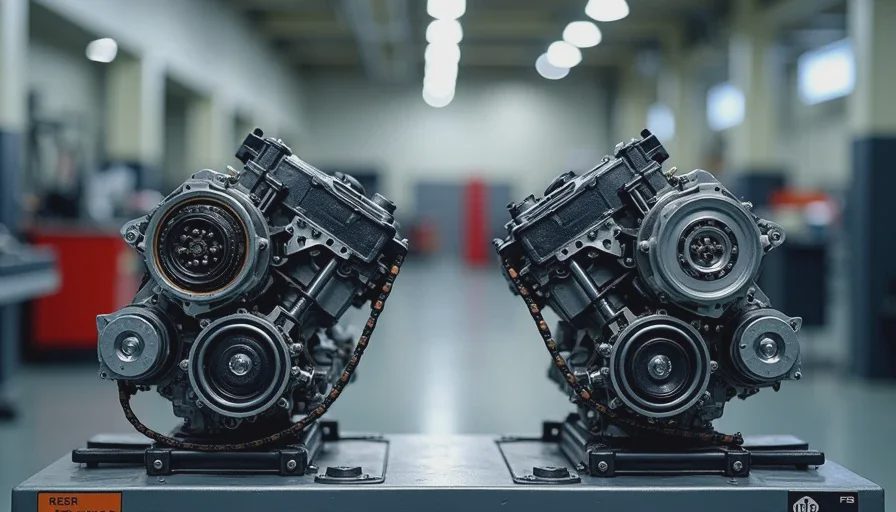
On EJ engines (pre-2010): Head gasket failure is common at 80,000-120,000 miles. The symptoms: coolant loss, overheating, white smoke from the exhaust, or oil in the coolant. The repair is expensive — about $1,800-$2,500 for the job.
On FB engines (2011+): Head gasket failure is rare. I've seen a few, but they're not common. The new multi-layer steel gaskets are much more durable.
What to do at 100,000 miles:
If you have an EJ engine, check for head gasket leaks. Look for coolant leaks around the heads. Check the coolant level regularly.
If you have an FB engine, it's less of a concern. But still check for leaks.
3. The Spark Plugs
Here's the thing about boxer engines: the spark plugs are on the sides of the engine, buried under the intake manifold (on the front) or the exhaust manifold (on the rear).
In an inline-four, changing spark plugs is a 30-minute job. In a boxer, it's a 2-hour job. You have to remove the air box, the battery, the intake manifold, and sometimes the exhaust manifold.
What I've seen:
Subaru recommends spark plug replacement every 60,000 miles. But many owners skip it.
At 100,000 miles, the spark plugs are worn. The gaps have widened, and the electrodes are eroded. The car will run rough, idle poorly, or have reduced power.
What to do at 100,000 miles:

Replace the spark plugs. It's about $300-$400 at an indie shop. It's worth it.
4. The PCV System (I Know, I Know)
Yes, the PCV system. Again.
I know I've written about the PCV system on Volvos, but it's also a common failure point on Subaru boxer engines. The PCV system is responsible for venting blow-by gas from the crankcase. If it fails, the pressure builds up, and oil starts leaking out of every seal.
What I've seen:
The PCV valve on Subaru boxer engines can fail around 60,000-80,000 miles.
The symptoms: oil leaks, increased oil consumption, and a check engine light.
What to do at 100,000 miles:
Replace the PCV valve. It's about $40 for the part and 30 minutes of labour. It's cheap and easy, and it can save you from a $1,000 oil leak repair.
5. The Oil Consumption (Another Known Issue)
Here's the one that's caused the most headaches.
Some Subaru boxer engines — particularly the early FB engines (2011-2014) — consume oil. Subaru issued a service bulletin and revised the piston rings for 2015.
What I've seen:
The oil consumption is about 1 quart per 3,000-5,000 miles.
It's caused by the piston rings, which are not as robust on the early models.
The symptoms: you have to add oil between changes. The oil light comes on. The engine runs rough.
What to do at 100,000 miles:
If you have a 2011-2014 model, check the oil level regularly. Carry a quart in the boot.
If the oil consumption is severe (1 quart per 1,000 miles), the engine may need a piston ring replacement — about $2,500-$3,500.
For 2015+ models, the issue is much less common.
6. The Suspension Bushings and Struts
This isn't engine-specific, but it's a common wear item at 100,000 miles.
What I've seen:
The front lower control arm bushings wear out, causing a clunk over speed bumps.
The rear struts can leak, causing a bouncy ride.
The front strut mounts can wear out, causing a popping noise.
What to do at 100,000 miles:
Replace the lower control arm bushings — about $800 for both sides.
Replace the rear struts — about $600-$800.
Replace the front strut mounts — about $400-$600.
7. The CVT Fluid (If Equipped)
The CVT (continuously variable transmission) on many Subaru models requires a fluid change at 60,000-80,000 miles.
What I've seen:
Many owners skip the fluid change.
The CVT can start to shudder, jerk, or hesitate.
What to do at 100,000 miles:
Change the CVT fluid. It's about $400 at an indie shop.
If it hasn't been done, don't wait any longer.
The Repair Reality: Cost Comparison
Item | Cost (Indie Shop) | Frequency |
|---|---|---|
Timing belt (EJ engines) | $800-$1,200 | Every 100,000 miles |
Timing chain tensioner (FB engines) | $400-$600 | As needed |
Head gaskets (EJ engines) | $1,800-$2,500 | As needed (80k-120k) |
Spark plugs | $300-$400 | Every 60,000 miles |
PCV valve | $100-$150 | As needed |
CVT fluid | $400 | Every 60,000 miles |
Control arm bushings | $800 | As needed (80k-100k) |
Rear struts | $600-$800 | As needed (80k-100k) |
Total 100,000-mile service cost:
EJ engine (timing belt): $1,500-$2,500 (including belt, plugs, PCV, and fluid)
FB engine (chain): $500-$1,000 (including plugs, PCV, and fluid)
The Family Test
I put a 2018 Outback with 98,000 miles through the Keller family test.
Mia's take: She loved the rear seat. The legroom is generous, the rear air vents work well, and the rear window is big enough for her to see out of. She said: "It's like a big bedroom. Can we get this one?"
Socket's take: The cargo area is huge — 32.5 cubic feet. He jumped in without hesitation, stretched out, and sighed. He gave it a tail-wag of approval — high praise from Socket.
Claire's take: She drove it for a day. Her feedback: "It's easy to drive. The visibility is great. The steering is light. But the infotainment screen is frustrating — I couldn't figure out how to adjust the climate control without taking my eyes off the road."
My take: The Subaru boxer engine is a durable, reliable, and well-engineered engine. It has its quirks — and every engine does — but it's one of the most reliable engines on the market. At 100,000 miles, you need to budget for maintenance, but it's not a money pit.
The Buyer's Guide
If you're shopping for a Subaru with 100,000 miles, here's what you need to know:
The Sweet Spots
2015+ Forester, Outback, or Legacy with the FB engine (2.5L or 2.4L): These are the best. The timing chain is durable, the head gaskets are reliable, and the oil consumption is minimal.
2011-2014 (early FB): Good cars, but monitor oil consumption.
Pre-2010 EJ engines: Good cars, but budget for the timing belt and head gaskets.
What to Check Before You Buy
Oil level. Check the dipstick. If it's low, the car is burning oil. Negotiate accordingly.
Coolant level. Check for a leak or low coolant level. If it's low, get a pre-purchase inspection.
Spark plugs. Ask the seller if they've been replaced at 60,000 miles. If not, budget for the job.
CVT fluid. Ask if the CVT fluid has been changed at 60,000 miles. If not, budget for the job.
Suspension. Drive it over some bumps and listen for clunks. If you hear clunks, the bushings are likely worn.
Timing belt (EJ only). If the belt hasn't been replaced, budget $800-$1,200.
What to Avoid
2011-2014 with severe oil consumption. If the seller admits the car burns oil, walk away or negotiate a discount.
Pre-2010 with a neglected timing belt. A broken timing belt is a destroyed engine.
Any car with a check engine light or rough running. These issues can be expensive.
The Subaru boxer engine at 100,000 miles is a testament to good engineering. It's durable, reliable, and well-designed. It has its quirks — the spark plugs are hard to reach, the head gaskets on older models can fail, and the PCV system needs attention — but it's one of the most reliable engines on the market.
The bottom line: If you're buying a used Subaru with 100,000 miles, budget for maintenance. The timing chain (or belt), spark plugs, PCV valve, CVT fluid, and suspension bushings all need attention. But if you do the maintenance, the car will last another 100,000 miles — and then some.


No signals yet — transmit the first.