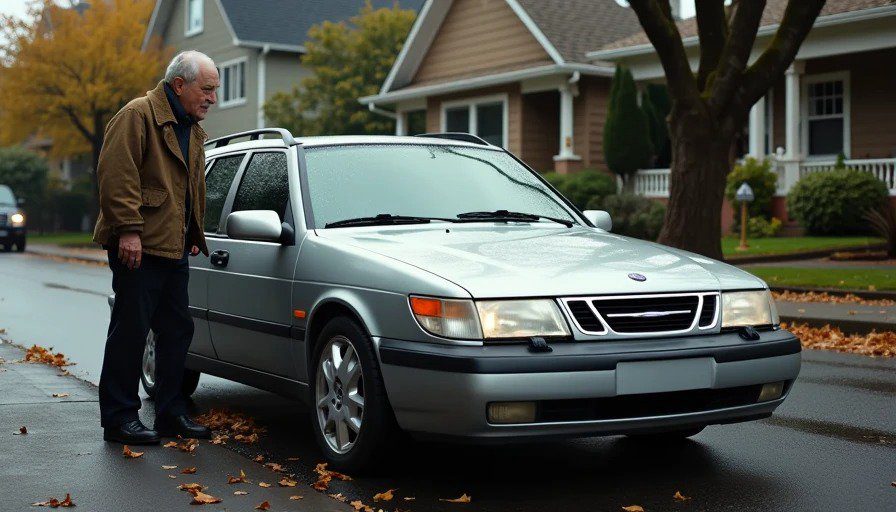
The first time I saw it, I almost told the owner to scrap it.
It was a 2002 Saab 9-5 Aero wagon, silver over black leather, 187,000 miles on the clock. It had been parked in a driveway in Northeast Portland for two years, collecting leaves and the kind of moss that only grows in Oregon's wet season. The owner was a retired architect named Lars, and he'd brought it to Keller Motor Works on a flatbed.
"I know it looks bad," he said. "But I can't let it go. It was my father's car. I've had it for fifteen years. I want to drive it again."
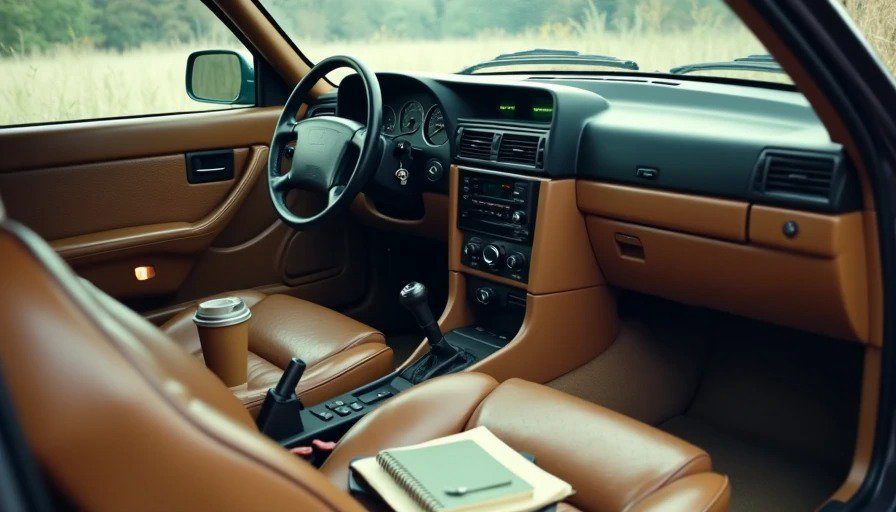
I looked at the car. The paint was faded. The headlights were cloudy. The interior smelled like wet wool and old coffee. The tyres were flat and cracked. And I knew, from experience, that a 187,000-mile Saab was going to need a lot of work.
But I also knew something else. I'd worked on enough Saabs to understand that this car wasn't just a machine. It was a relationship. And Lars wasn't asking me to fix a car — he was asking me to help him keep a promise.
So I said yes.
The Saab 9-5: A Brief History
Before I tell you what happened next, let me give you some context.
The Saab 9-5 was introduced in 1997 as the replacement for the 9000. It was built on GM's Epsilon platform (shared with the Opel Vectra and the Saab 9-3), but Saab's engineers did what Saab engineers always did — they ignored the GM parts bin and built something unique.
The 9-5 had:
A turbocharged 2.3-litre four-cylinder engine (the B235) that made 185-260 horsepower, depending on the tune.
A "Trionic" engine management system that was one of the most advanced of its era.
A suspension that was tuned for comfort, but with surprisingly good handling.
A "Night Panel" button that dimmed all the dashboard lights except the speedometer — a Saab signature.
An ignition key mounted between the seats (because Saab engineers thought it was safer in a crash).
A "freewheel" feature on the automatic transmission that disengaged the engine on deceleration for better fuel economy.
The 9-5 was a genuinely good car. It was safe, comfortable, and — in Aero trim — genuinely quick. It was also weird in all the right ways. It was a car for people who didn't want to drive a BMW or a Mercedes, because they wanted something that said something different about them.
But the 9-5 had two problems.
Problem one: It was built by GM, which meant it shared parts with the Opel Vectra and the Saturn L-Series. That sounds good, but it also meant that Saab's engineers had to compromise on things that mattered to them.
Problem two: Saab went bankrupt in 2011. The factory closed. The parts supply chain dried up. And suddenly, a car that was already a bit of an oddball became a niche within a niche.
What I Learned From Lars's 9-5
I spent six weeks restoring Lars's 9-5. It wasn't a full restoration — that would have cost $20,000 and taken a year — but it was a thorough mechanical overhaul.
Here's what I found.
The Engine: Surprisingly Robust
The 2.3-litre B235 engine is one of the most durable turbo engines ever built. The block is cast iron, the crank is forged steel, and the rods are strong enough to handle 400+ horsepower. The turbocharger (a Mitsubishi TD04) is reliable, and the Trionic engine management system is robust and well-understood.
What I fixed:
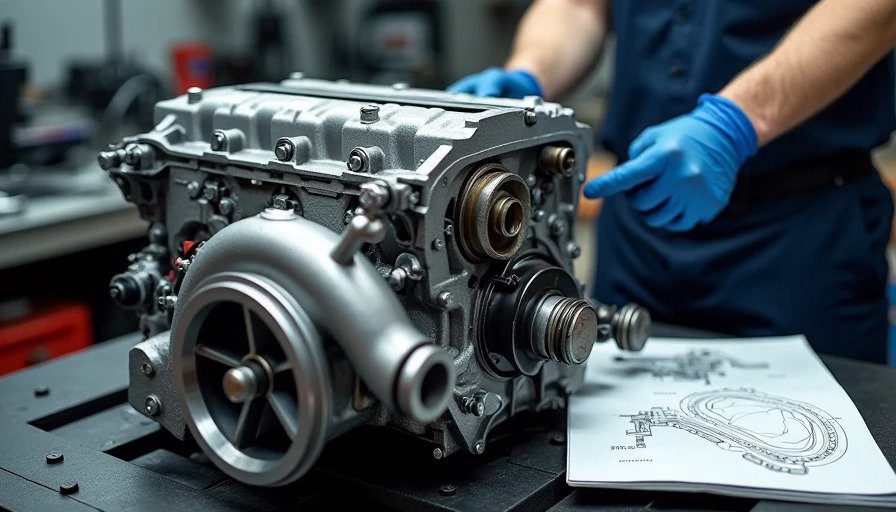
The PCV system. The 9-5's PCV system is similar to the Volvo Drive-E's — it can clog and cause oil leaks. I replaced the PCV valve and the oil separator. It was about $200 in parts and two hours of labour.
The timing chain. The B235 uses a timing chain, not a belt. It's reliable, but the tensioner can fail at high mileage. I replaced the tensioner, guides, and chain. That was $600 in parts and four hours of labour.
The oil pan. The B235's oil pan is aluminium and can crack if you bottom out. Lars's car had a hairline crack. I replaced the pan and the oil pickup tube. That was $400 in parts and three hours of labour.
The turbocharger. The TD04 was original, 187,000 miles, and still spooled. I checked the bearings, the wastegate, and the actuator. Everything was fine. The turbo was original and still in good shape.
The spark plugs. Bosch platinum, $40. Easy.
The verdict: The B235 is a brilliant engine. It's overbuilt, reliable, and surprisingly easy to work on. It's also a dead simple engine — there's no variable valve timing, no direct injection, no mild hybrid system. It's just a turbocharged four-cylinder that gets the job done.
The Transmission: A Blessing and a Curse
The 9-5 uses the Aisin AW50-42SN four-speed automatic. It's the same transmission used in the Toyota Camry, the Lexus ES, and the Volvo V70. It's a reliable transmission — but it's also four speeds, which means the 9-5 feels dated on the highway.
What I fixed:
The transmission fluid. The fluid was dark and smelled burnt. I did three drain-and-fills with Toyota T-IV fluid. The transmission was much smoother after.
The shift cable. The cable was stretched, causing a slight delay on engagement. I replaced the cable. That was $150 and two hours of labour.
The torque converter. The converter was fine, but the lock-up clutch was wearing. I recommended a replacement at the next major service.
The verdict: The transmission is durable, but it's not modern. The 9-5 would be a much better car with a five-speed or six-speed automatic. But the four-speed is reliable — and that's what matters for a car that's twenty years old.
The Suspension: Comfortable but Worn
The 9-5's suspension is a simple MacPherson strut design up front and a multilink rear. It's comfortable and well-damped, but it's also twenty years old.
What I fixed:
The front lower control arms. The bushings were shot. I replaced the control arms with new aftermarket units. That was $300 for parts and two hours of labour.
The rear shocks. The rear Nivomat self-levelling shocks were leaking. Nivomats are expensive — about $600 each — but I found a used pair on eBay for $250. They worked fine.
The front tie rod ends. The steering was loose. I replaced the tie rod ends and had the car aligned. That was $200 and one hour of labour.
The verdict: The 9-5's suspension is durable and comfortable. The parts are mostly available aftermarket, and the design is simple enough that most shops can work on it.
The Electronics: Saab's Weak Point
This is where the 9-5 shows its age.
The Trionic engine management system is robust, but the body electronics — the SID (Saab Information Display), the ACC (Automatic Climate Control), the central locking system — can be problematic.
What I fixed:
The SID display. The SID's LCD screen had dead pixels. This is a common Saab issue. I found a refurbished unit on a Saab forum for $150.
The central locking. The system was intermittent. I traced the issue to a faulty relay in the fuse box. The relay was $20.
The climate control. The ACC panel had some sticky buttons. I cleaned the contacts with contact cleaner. It worked fine after.
The verdict: The electronics are the weakest part of the 9-5. The Trionic is reliable, but the body electronics are prone to glitches. If you're buying a used 9-5, expect to deal with some electrical gremlins. They're fixable, but they're frustrating.
The Parts Situation: What You Need to Know
This is the part that matters if you're considering a Saab.
Parts Availability: The Good News
Saab was built on a GM platform, which means a lot of parts are shared with other GM cars.
The engine: The B235 engine is a GM Ecotec derivative. The internals are Saab-specific, but many external components (alternator, starter, water pump) are GM parts-bin.
The transmission: The Aisin AW50-42SN is a Toyota transmission. You can get parts from Toyota dealers.
The suspension: The front suspension is shared with the Opel Vectra. The rear suspension is Saab-specific, but aftermarket parts are available.
The brakes: The brakes are shared with the Opel Vectra. Rotors, pads, and calipers are widely available.
Availability: Most mechanical parts are available aftermarket or through GM dealers. You can find parts on RockAuto, FCP Euro, and Saab-specific suppliers like eSaabParts and GenuineSaab.
Parts Availability: The Less Good News
Some parts are Saab-specific and difficult to find.
The turbocharger: The TD04 is a Mitsubishi part, but the wastegate and the actuator are Saab-specific. You can find refurbished units, but new ones are rare.
The engine management: The Trionic control unit is Saab-specific. If it fails, you'll need a refurbished unit or a used one from a Saab forum.
The body electronics: The SID, the ACC, the central locking system — all Saab-specific. Refurbished units are available, but they're not cheap.
The interior trim: The dashboard, the door cards, the seats — if you need a replacement, it's a challenge. The interior parts are no longer manufactured, and used ones are getting expensive.
The windscreen. This is the biggest challenge. The 9-5's windscreen is Saab-specific, and it's no longer manufactured. If your windscreen cracks, you'll need to find a used one or a reproduction. It's not impossible, but it's a challenge.
The bottom line: The 9-5 is a car that requires commitment. If you're willing to search forums, join Facebook groups, and spend time on eBay, you can keep it on the road. If you're not, you'll be frustrated.
What Lars Taught Me About Loyalty
The 9-5 wasn't the first Saab I'd worked on. But it was the first one that made me understand why people love them.
Lars was a quiet, thoughtful man. He'd retired from architecture, and he'd spent his career designing buildings that were functional, beautiful, and understated. He saw the same qualities in the 9-5. It was a car that wasn't trying to impress anyone — it was just doing its job, elegantly.
When I handed him the keys after six weeks of work, he drove it around the block and came back with a smile on his face. It was the kind of smile that said: "I'm home."
He told me: "My father bought this car new in 2002. He drove it for ten years, and he gave it to me when he got too old to drive. I've owned it for fifteen years, and it's been with me through two marriages, three house moves, and the birth of my son. I can't sell it. It's not a car — it's a part of my life."
That's the thing about Saabs. They're not the fastest cars. They're not the most reliable cars. They're not the cheapest cars to own. But they're cars that people bond with. They have character. They have quirks. They have a soul.
I don't believe that every car has a soul. The average BMW X3 is a transportation appliance. But a Saab 9-5? It has something. It's the car that engineers built for themselves, not for marketing departments. It's the car that's weird in all the right ways.
What I'd Tell You About Buying a Saab
If you're considering a Saab 9-5, here's what you need to know.
The Sweet Spots
2004‑2005 Aero: The best of the 9-5s. The engine was updated to 260 hp, and the interior was improved. The later cars (2006‑2009) had more electronics and more complexity — I'd skip them.
2002‑2003 Aero: Good cars, but they have a different engine management system (T7) that's less tuneable. The earlier cars (2000‑2001) had a more primitive system.
2.3‑litre 9-5, not the 3.0‑litre V6. The V6 is a GM engine, and it's less reliable and more expensive to maintain. The four‑cylinder is the one to get.
Manual transmission if you can find it. The manual is more engaging and more reliable. The automatic (four‑speed) is fine, but it's dated.
What to Check Before You Buy
The PCV system. If the oil cap is hard to remove, the PCV system is clogged. It's a cheap fix, but it's a sign of neglect.
The timing chain tensioner. The tensioner can fail, causing a rattling noise on startup. It's a $200 fix, but it's important to catch early.
The turbocharger. Listen for a whine or a rattle. If the turbo is failing, it's a $1,000+ repair.
The suspension. Check for clunks over speed bumps. The lower control arm bushings wear out, and the rear Nivomat shocks are expensive.
The electronics. Test the SID, the ACC, and the central locking. If they're glitchy, budget for repairs.
The windscreen. Check for cracks. If it's damaged, you'll need to find a replacement.
The Parts Strategy
Join a Saab forum. The Saab community is one of the most active and supportive car communities on the internet. You'll find parts, advice, and friendship.
Check eBay and Facebook Marketplace. Used parts are plentiful, and they're often significantly cheaper than new parts.
Use Saab-specific suppliers. eSaabParts, GenuineSaab, and Orio (the successor to Saab's parts department) are your friends.
Buy maintenance parts proactively. If you know the PCV system needs attention, order the parts before it fails. If you know the timing chain tensioner is a weak point, replace it before it breaks.
The Saab 9-5 is not a car for everyone. It's a car for people who value character over practicality, who are willing to do research, and who are willing to spend time on forums.
It's also a car that rewards loyalty. If you treat it well, it will treat you well. It will give you a driving experience that's different from anything else. And it will become a part of your life.
Lars's 9-5 is still on the road. I saw him a few weeks ago, and he was driving it. He said it's running better than ever — and that he's planning to drive it for another 100,000 miles.
I don't think he'll make it. But I also don't think he cares. For him, the car is more than a machine. It's a connection to his father, to his past, and to a time when cars were built by engineers, not accountants.
That's what the Saab 9-5 taught me about loyalty. It's not about the car being perfect. It's about the car being worth the effort.



No signals yet — transmit the first.