Why SUV owners regret their purchase is usually less complicated than the internet makes it sound. Most did not buy a bad vehicle. They bought a vehicle that solved an imagined problem while creating several ordinary ones: expensive tires, poor parking manners, stiff ride quality, awkward cargo space, and a monthly payment that feels heavy after the new-car smell disappears. I have watched this happen in my shop, usually around the first oil service, when a proud owner starts asking what the trade-in process would look like.
An SUV can be exactly right for a family, a winter commute, or regular towing. It can also be a tall, expensive sedan that uses more fuel and takes up more room. The data is for the engineers. The feel is yours. Here are the mechanical and everyday reasons some buyers change their minds.
The size looks useful until daily life begins
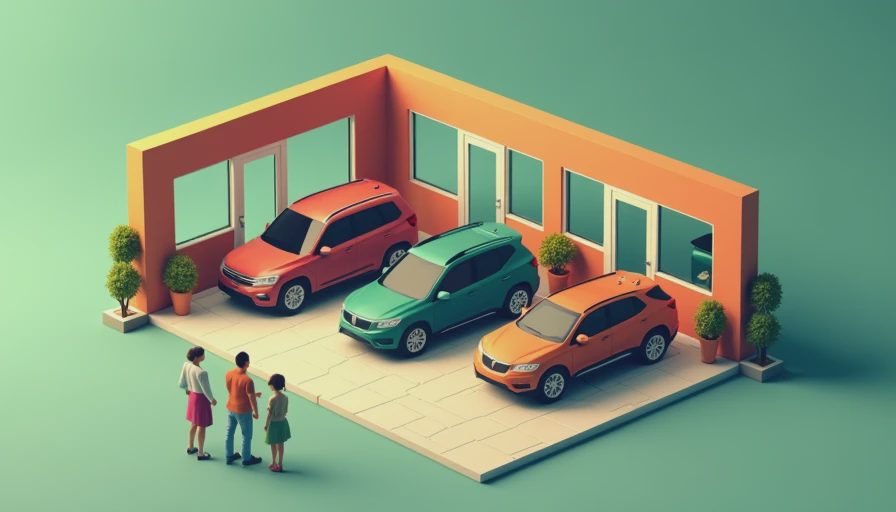
On a dealer lot, an SUV feels manageable because there is open pavement around it. At home, the same vehicle can barely clear the garage shelving. In a grocery store, its wide doors need a generous gap. In an older Portland neighborhood, a midsize SUV can make parallel parking feel like backing a small boat into a slip.
This is one reason why SUV owners regret their purchase: they paid for a large footprint without using the space. A three-row crossover may have room for seven on paper, but the third row often leaves a shallow cargo area. Put in two child seats, a stroller, and a week's groceries, and the useful space disappears quickly. A wagon or minivan can carry the same people more efficiently, while a compact hatchback may handle the daily commute with less stress.
Before buying, measure the garage opening, parking space, and rear cargo area. Bring the biggest object you regularly carry. Do not rely on a salesman's promise that it should fit. “Should fit” is not a measurement.
Fuel, tires, and brakes change the ownership math
The sticker price is only the first number. A heavier vehicle generally needs more fuel, more tire, and sometimes more brake material than a comparable sedan. A set of decent all-season tires for a compact crossover might run roughly $600 to $900 installed. Larger 19- or 20-inch tires can push past $1,000, especially when the vehicle requires a specific load rating or run-flat design.
Fuel costs also creep up. A driver who moves from a 30-mpg sedan to a 22-mpg SUV and travels 15,000 miles a year uses hundreds of additional gallons over time. At $3.50 per gallon, that difference can represent several hundred dollars annually. Add wheel damage from potholes, more frequent alignment checks, and higher brake replacement costs, and the “small upgrade” becomes a recurring bill.
Insurance can add another layer. Collision coverage, comprehensive coverage, the vehicle's repair cost, location, driving record, and deductible all affect the premium. Get an insurance quote before signing paperwork, not after. The monthly difference between a CR-V, a luxury crossover, and a body-on-frame SUV can be meaningful.
Ride height does not guarantee comfort
Many buyers test an SUV for ten minutes and conclude that the elevated seating position will solve every comfort problem. It may help some drivers get in and out, but seat height is not the same as good ergonomics. Some dashboards sit high, forcing shorter drivers to look around the steering wheel. Some front seats have aggressive side bolsters that press into a wider driver's ribs. A panoramic roof can reduce headroom, while thick pillars make it harder to see cyclists or children near the rear corners.
Suspension tuning matters more than the badge. A heavily optioned crossover on large wheels may look expensive but transmit sharp impacts over expansion joints. I have had customers arrive with a new SUV and a headache after a long highway trip. The problem was not a faulty part. It was a firm suspension, low-profile tires, and a seat that did not support their lower back.
Take the test drive on the roads you actually use. Try a rough neighborhood street, a freeway entrance, and a parking garage. Sit in every row. Have another adult sit behind your normal driving position. If Mia cannot see out and Claire feels tired after twenty minutes, the brochure's cargo number will not rescue the purchase.
Four-wheel drive is often purchased for the wrong reason
All-wheel drive is useful when it can distribute power to wheels with traction, but it does not create grip where none exists. It cannot shorten a wet-road stopping distance, and it does not replace good tires. Four-wheel drive adds weight, mechanical complexity, and service requirements. In some systems, mismatched tire wear can create problems because the tires rotate at different effective speeds.
This is another answer to why SUV owners regret their purchase. They paid for an all-wheel-drive system to handle two snowy mornings a year, then spent the rest of the time carrying its weight through traffic. In many regions, a well-maintained front-wheel-drive car with quality tires is perfectly adequate. In mountain country or on an unpaved driveway, the calculation changes. Be honest about the roads, not the imagined adventure.
If you need towing, also examine the vehicle's payload. A tow rating alone does not tell you how much cargo, passengers, hitch weight, and accessories the vehicle can carry safely. A family of five can reach the payload limit before the trailer is loaded.
Reliability surprises arrive after the warranty conversation
Modern SUVs are often mechanically sound, but they contain more equipment than the simple vehicles many buyers replace. Turbocharged engines, electronically controlled all-wheel-drive clutches, powered liftgates, cameras, radar sensors, adaptive dampers, and complicated infotainment systems all need diagnosis when something goes wrong. A sensor behind a windshield may be inexpensive by itself, yet calibration after glass replacement can add several hundred dollars.
That does not mean every SUV is a repair disaster. It means the used example must be inspected properly. Look for uneven tire wear, delayed transmission engagement, coolant residue, oil leaks, warning lights, and evidence of accident repairs. Scan the vehicle with a capable diagnostic tool, review service records, and price common maintenance before buying. A pre-purchase inspection costing about $150 to $250 is cheap compared with discovering worn suspension components after delivery.
How to avoid becoming one of those owners
Start with a normal week, not a fantasy road trip. Write down how many passengers you carry, what you haul, how often you drive in snow, and whether you tow anything. Then compare a sedan, hatchback, wagon, minivan, and SUV using the same requirements. If the SUV wins only because it feels safer from the driver's seat, slow down and test its visibility, braking feel, insurance quote, and total running cost.
Shop several trims. An affordable base model on sensible 17-inch wheels may be more comfortable and cheaper to maintain than the flashy version with oversized wheels and fragile tires. Price an oil service, four tires, brake replacement, and insurance before committing. Ask an independent technician which engine and transmission combinations have the best service history, rather than accepting a salesperson's “they are all good.”
The best defense against why SUV owners regret their purchase is a boring, accurate test. Live with the vehicle for an hour. Load it with your real gear. Check the garage. Get the insurance number. If the vehicle still makes sense after those steps, buy it confidently. If not, a smaller car is not a compromise; it is the right tool.
A vehicle should make ordinary life easier, not turn every parking space, fuel stop, and repair invoice into a reminder that you bought for someone else's lifestyle. That is the part many shoppers miss, and it is why SUV owners regret their purchase after the excitement wears off.



No signals yet — transmit the first.